How Many Junk Yards Are in the United States?

How Many Junk Yards Are in the United States?

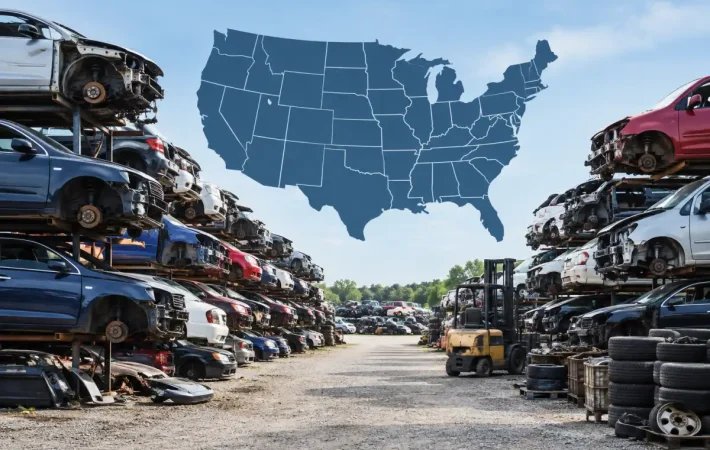
There is no single official U.S. statistic covering every business commonly called a junkyard, salvage yard, auto wrecking yard, used-parts yard, or scrap yard. The most reliable answer depends on how the term is defined.

How many junk yards are in the US?

The closest federal count is 1,805 employer establishments. This figure comes from the U.S. Census Bureau’s 2023 Business Patterns data for NAICS 423140, a category covering used motor vehicle parts merchant wholesalers, including businesses that dismantle vehicles to sell their parts.

For a broader estimate, the commercial directory SalvageAtlas lists 2,648 auto salvage yards across the United States. That directory count includes used auto-parts businesses, U-pull-it lots, and yards that buy junk cars. It is not a federal business census and may include inactive, duplicate, or unverified listings.

Why the numbers are different

“Junkyard” is a common business term rather than one complete federal industry category. Different types of operations are classified separately:

  • NAICS 423140: used motor vehicle parts merchant wholesalers and businesses that dismantle vehicles to sell parts.
  • NAICS 441310: retail used automotive-parts dealers, which can include retail-oriented junkyards.
  • NAICS 423930: some scrap-focused operations.

Because these categories are separate, the Census Bureau’s 1,805 establishments do not represent every junkyard operating in the country. Combining the categories also requires care to avoid counting the same business more than once.

Best estimate for the number of U.S. junkyards

For a narrow, official count, use approximately 1,805 employer establishments. This is the strongest federal figure for vehicle-dismantling and used-parts wholesale businesses.

For a broader answer based on listed auto salvage businesses, use approximately 2,648 junkyards and auto salvage yards. This number is more inclusive but comes from a commercial directory rather than government statistics.

How many junk yards are in the USA?

The practical answer is that the United States has at least about 1,805 federally counted vehicle-dismantling and used-parts establishments, and roughly 2,648 listed auto salvage yards in a broader commercial directory. The actual total for every type of junkyard is not published as one official national number.

Do Junk Yards Buy Scrap Metal? What They Accept and What to Bring

Do Junk Yards Buy Scrap Metal? What They Accept and What to Bring

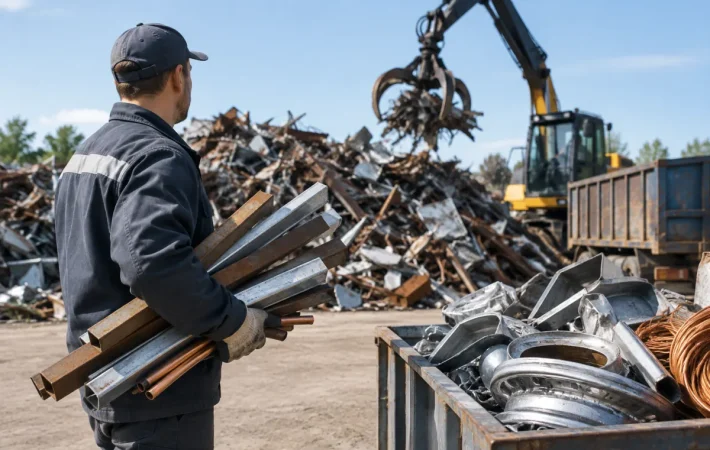
Yes. Many junk yards and scrap-metal recycling facilities buy scrap metal from individuals, contractors and businesses. They commonly accept both ferrous metals, such as steel and iron, and nonferrous metals, including copper, aluminum, brass, lead, zinc and stainless steel.

Acceptance rules differ by facility and local law, so confirm the current requirements before transporting unusual, hazardous or refrigerant-containing items.

What scrap metal do junk yards buy?

  • Steel and iron
  • Copper wire and plumbing scrap
  • Aluminum, including rims
  • Brass and stainless steel
  • Lead and zinc
  • Auto bodies, vehicle parts and radiators
  • Electric motors
  • Washers, dryers and other metal appliances
  • Metal furniture, grills and HVAC scrap
  • Lead-acid and steel-cased batteries, where accepted

Facilities usually separate metals by type and grade. Clean copper, aluminum and brass generally fall into different categories from mixed, coated or contaminated metal, so preparation can affect the final payment.

What do junk yards usually refuse?

Commonly refused items include plastics, glass, cardboard, paper, televisions, microwaves, wood, mattresses, liquids, trash, propane tanks and hazardous or contaminated materials. Appliances containing refrigerant may need refrigerant removal before acceptance.

Do not assume that an item with some metal content qualifies as scrap metal. Call the yard first when an item contains chemicals, fuel, refrigerant, electronics, glass or other nonmetal components.

What should you bring when selling scrap metal?

  • A valid government-issued photo ID
  • Proof of ownership for a vehicle or other items when required
  • A vehicle title when selling a junk car
  • Separated metal types with plastic, rubber and trash removed where possible
  • Clean, dry material free of hazardous substances

Vehicle requirements are often stricter than those for loose metal. Old Dominion Recycling in Hampton, Virginia, requires a vehicle title and does not accept vehicles with a lien or title loan. All Kinds Of Scrap in Cannelton, Indiana, requires a title or certificate of authority for vehicles and catalytic converters.

How is scrap metal priced?

The yard generally weighs, inspects and grades the material before payment. The amount depends on the metal type, weight, cleanliness, grade and current market conditions. Prices vary by location and change over time, so a published rate from one yard may not apply elsewhere.

Scrap yards that buy metal

Jacksonville Metal Recycling

Jacksonville Metal Recycling buys steel, copper, aluminum, brass, electronics, appliances, metal furniture, grills, wire, HVAC scrap, plumbing scrap and aluminum rims. Customers should bring identification, and no appointment is required.

Address: 4718 Philips Highway, Jacksonville, FL 32207
Phone: 904-733-5575

Beacon Recycling

Beacon Recycling has multiple Michigan locations and accepts steel, aluminum, brass, copper, lead, zinc, stainless steel, high-temperature alloys, electric motors, auto bodies, appliances and other ferrous and nonferrous materials. It also purchases old cars, appliances and lead-acid batteries for cash. The company does not accept plastics, electronic scrap, cardboard, paper, televisions or glass.

Old Dominion Recycling

Old Dominion Recycling buys steel, aluminum, copper, brass, stainless steel, washers, dryers and most appliances. It also buys cars, subject to title and ownership requirements. Refrigerators and air conditioners must have refrigerant reclaimed before acceptance.

Address: 1618 W Pembroke Ave, Hampton, VA 23661
Phone: 757-723-0757

All Kinds Of Scrap, Inc.

All Kinds Of Scrap accepts tin, appliances, vehicles, copper, brass, aluminum, radiators, auto and steel-cased batteries, electric motors, lead, stainless steel, aluminum rims and catalytic converters. It refuses propane tanks, televisions, microwaves, plastic, wood, trash, mattresses, street signs, glass and hazardous materials.

Address: 4775 Boyd Road, Cannelton, IN 47520
Phone: 812-547-3101

CASS

CASS operates multiple retail scrap-metal recycling locations and accepts ferrous and nonferrous metals such as steel, aluminum, brass, copper and stainless steel when they comply with its acceptance policy. Valid government-issued identification is required for transactions. Customers should separate metal types and provide clean, dry material without plastic, rubber, trash or hazardous substances.

Before taking metal to a junk yard

  1. Call the facility to verify that it accepts the specific item.
  2. Ask whether identification, a title or other ownership documents are required.
  3. Separate copper, aluminum, brass, steel and other metals when possible.
  4. Remove nonmetal materials without creating a safety or environmental hazard.
  5. Check whether appliances require refrigerant removal.
  6. Ask about current pricing and payment procedures before unloading.
How Much Are Transmissions at Junk Yards? Typical Prices and Fees

How Much Are Transmissions at Junk Yards? Typical Prices and Fees

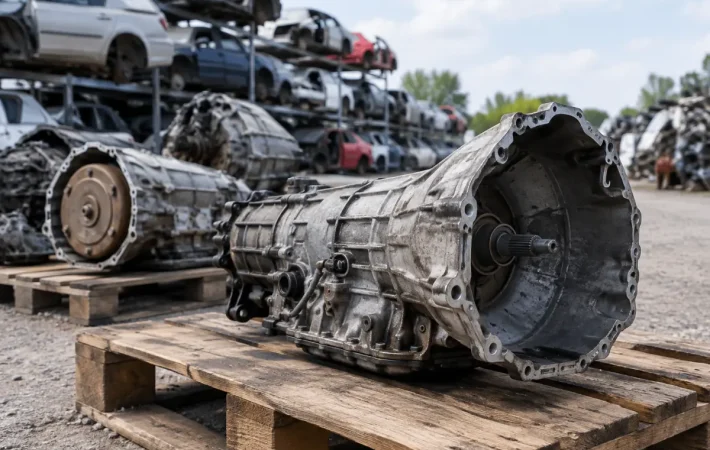
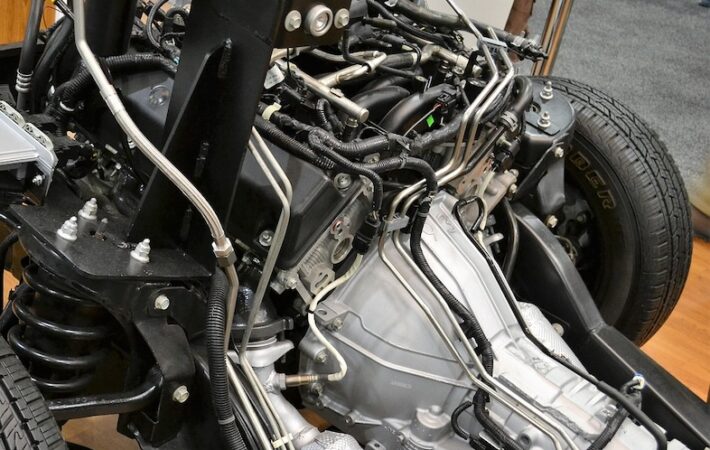
Used transmissions at junk yards typically cost between $100 and $600, although prices for certain vehicles and full-service purchases can reach about $1,200. The exact amount depends on the vehicle’s year, make, model, transmission type, mileage, condition, warranty, and whether you remove the part yourself.

Typical junk-yard transmission prices

  • Self-service salvage yard: about $100 to $205 before additional fees.
  • Full-service used transmission: approximately $250 to $600 for many common vehicles.
  • Higher-demand or less common applications: roughly $400 to $1,200 in some salvage-yard listings.

These figures are not directly interchangeable. A self-service price usually covers the part only and may require you to pull the transmission from the vehicle. A full-service quote may include removal by yard staff, but warranty, shipping, taxes, labor, and other charges can still be separate.

Published junk-yard price examples

Pull-A-Part

Pull-A-Part lists about $100 as a possible starting price for a used transmission at a salvage yard. Its self-service model lets customers remove parts themselves, which can reduce labor costs. The company notes that environmental fees, core charges, taxes, and optional part-pulling services may be added, and prices vary by location.

Marion County Auto Parts

Marion County Auto Parts publishes a standard transmission price of $169.83 plus a $25 core charge. A 4×4 transmission is listed at $204.97 plus the same $25 core charge. The yard also lists a $135 transmission labor charge, showing how removal or related labor can change the final bill.

Nationwide Auto Recycling

Nationwide Auto Recycling reports that used transmissions for many common vehicles generally cost about $250 to $600. Its pricing depends on the vehicle’s age, make and model, mileage, and current demand.

US Auto Recycling

US Auto Recycling prices transmissions by application instead of using one universal amount. Buyers must provide details for the specific vehicle and contact the yard for a current price.

What affects the price of a junk-yard transmission?

  • Vehicle application: A transmission for a common vehicle is often easier to find and less expensive than one for a rare or specialized model.
  • Transmission type: Automatic, manual, four-wheel-drive, and electronically controlled units may have different prices.
  • Mileage and condition: Lower-mileage units and transmissions with documented testing may cost more.
  • Self-service or full-service removal: Pulling the part yourself may lower the price, while yard removal adds labor or a pulling fee.
  • Warranty: A short-term replacement warranty can increase the purchase price but may reduce the risk of paying for another unit.
  • Availability and demand: Prices change with current inventory and demand for a particular vehicle.

Extra charges to check before buying

The advertised transmission price may not be the final amount. Ask the yard whether the quote includes:

  • Core charge
  • Environmental or recycling fee
  • Sales tax
  • Removal or pulling fee
  • Shipping
  • Testing or inspection
  • Warranty
  • Installation

A core charge is a refundable deposit that may be returned when you provide an acceptable old transmission. For example, Marion County Auto Parts lists a $25 core charge with its published standard and 4×4 transmission prices.

Installation costs more than the junk-yard part

Transmission installation is normally separate from the purchase price. Pull-A-Part gives an example of approximately $400 to $800 for professional gearbox installation, excluding the transmission itself. The final labor price depends on the vehicle, shop rates, accessibility, additional parts, fluids, and whether repairs are found during installation.

For example, a $169.83 transmission with a $25 core charge and $135 listed labor would total $329.83 before tax and any other fees, assuming the core charge is not later refunded. A professional installation estimate can make the complete repair substantially more expensive than the junk-yard part alone.

How to get an accurate transmission price

  1. Write down the vehicle year, make, model, engine size, drivetrain, and transmission type.
  2. Have the vehicle identification number available when contacting the yard.
  3. Ask whether the transmission is tested and record its mileage if available.
  4. Confirm the warranty period and what the warranty covers.
  5. Request a complete price that includes core charges, pulling fees, taxes, shipping, and installation if needed.
  6. Compare self-service and full-service quotes separately rather than treating them as equivalent prices.

For a quick estimate, plan on around $100 at a self-service yard, $170 to $205 plus a core charge for some published self-service listings, or $250 to $600 for a full-service used transmission for many common vehicles. An exact quote requires the vehicle application and the yard’s current inventory.

Do Junk Yards Take Cars for Free?

Do Junk Yards Take Cars for Free?

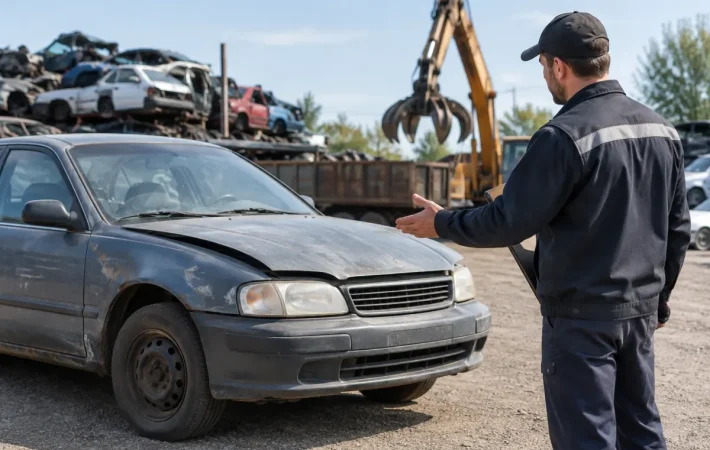
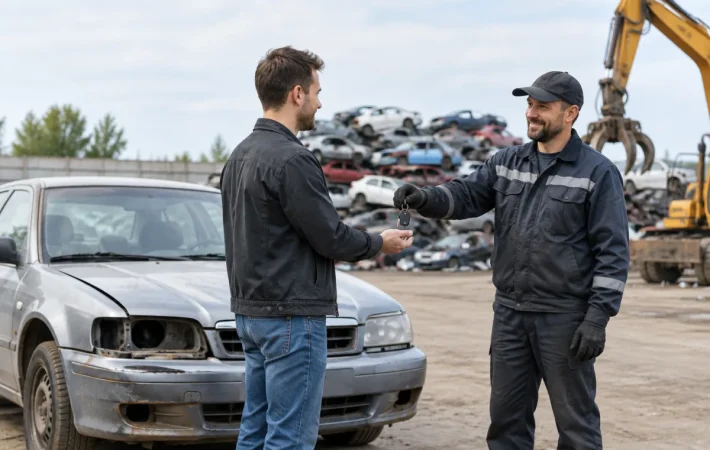
Many junk-car buyers and salvage-yard networks take vehicles for free when they are purchasing the car. In this arrangement, the company usually pays for towing from the vehicle’s salvage, parts, or scrap value instead of charging the owner a separate pickup fee.

Free pickup is not available from every junkyard, however. The terms can depend on the company, service area, distance, vehicle condition, access to the car, and whether the vehicle is being sold directly to the buyer.

When junkyards usually provide free pickup

Free towing is most common when you accept a purchase offer from a junk-car buyer. For example, Junk-A-Car states that towing is free even when the vehicle is not drivable, and that payment is made when the vehicle is collected. U-Pull-&-Pay also describes a process in which sellers receive an offer, schedule free towing, and arrange payment at pickup.

These are company policies, not a universal rule for every salvage yard. Before scheduling collection, confirm that the quoted amount is the final payment and that towing will not be deducted later.

How much does it cost to get a car towed to a junkyard?

There is no single nationwide price for towing a car to a junkyard. The cost depends on the towing provider, distance, location, vehicle condition, accessibility, and whether towing is included in a purchase offer.

  • Free: Often available when a junk-car buyer is purchasing the vehicle and includes pickup in the offer.
  • Charged separately: More likely when you hire a conventional tow truck yourself rather than selling the vehicle to the company providing the tow.
  • Potentially higher or unavailable: Possible when the car is difficult to access, incomplete, located far outside the normal service area, or involved in an abandoned-vehicle situation.

A private tow arranged independently is not automatically free. In some local junk-vehicle situations, the owner may also be responsible for towing or disposal costs.

What affects the junk car offer?

A buyer may estimate the vehicle’s value based on its weight, year, make, model, usable parts, completeness, and current local scrap-metal prices. Because the towing expense is often covered by that value, a vehicle with valuable parts or substantial scrap weight may qualify for free pickup more easily than an incomplete or difficult-to-recover car.

Questions to ask before arranging pickup

  1. Is towing included in the quoted offer?
  2. Will any towing, loading, disposal, or administrative fee be deducted from the payment?
  3. Is the pickup location inside the company’s service area?
  4. Will payment be made when the vehicle is collected?
  5. Which title, registration, identification, or lien documents are required?
  6. Are license plates or other items required to remain with the vehicle?

Do not assume that a “free tow” applies to every situation. Ask for the complete terms before the vehicle is collected, particularly if it is not drivable, difficult to reach, missing paperwork, or subject to a lien. The Federal Trade Commission also advises consumers to review towing-related costs and other charges in vehicle service agreements.

Junk Yard Hours: Opening, Closing, and Sunday Schedules

Junk Yard Hours: Opening, Closing, and Sunday Schedules

There is no universal opening or closing time for a junk yard. Hours vary by company, location, day of the week, and holiday schedule. In the United States, many self-service salvage yards open around 8:00 or 9:00 a.m. and stop admitting customers between 4:30 and 5:30 p.m.

What time does the junk yard open?

Many junk yards open at 8:00 or 9:00 a.m. For example, Pull-A-Part Atlanta East in Lithonia, Georgia, admits customers to its yard from 8:00 a.m. to 5:30 p.m. every day. Pull-A-Part Indianapolis opens its yard at 9:00 a.m., while Pull-A-Part Tucson opens at 8:00 a.m.

  • Pull-A-Part Atlanta East: 8:00 a.m. to 5:30 p.m., Monday through Sunday.
  • Pull-A-Part Indianapolis: 9:00 a.m. to 5:30 p.m., Monday through Sunday.
  • Pull-A-Part Tucson: 8:00 a.m. to 4:30 p.m., Monday through Sunday.

Do junk yards open on Sunday?

Many junk yards do open on Sunday, particularly larger self-service chains. The listed Pull-A-Part locations in Atlanta East, Indianapolis, and Tucson operate on Sunday during their regular yard hours. Independently operated junk yards may use different schedules, so Sunday availability must be confirmed for the specific business.

What time does the junk yard close today?

For many self-service yards, the customer-accessible yard closes between 4:30 and 5:30 p.m. Retail counters and vehicle-buying departments may remain open later, often until 6:00 p.m. This difference matters if you are visiting to remove parts, buy a part, or sell a vehicle.

Examples of closing times

  • Pull-A-Part Atlanta East: yard admission ends at 5:30 p.m.; retail sales continue until 6:00 p.m.
  • Pull-A-Part Indianapolis: yard admission ends at 5:30 p.m.; retail sales and car buying continue until 6:00 p.m.
  • Pull-A-Part Tucson: the listed yard hours end at 4:30 p.m.

Junk yard hours and holiday closures

A junk yard may operate seven days a week but still close for certain holidays. Pull-A-Part Atlanta East is closed on Thanksgiving, Christmas Eve, and Christmas Day. Holiday schedules can vary by location, so normal Sunday or weekday hours should not be assumed on a holiday.

Verified junk yard example

Pull-A-Part Atlanta East

Pull-A-Part Atlanta East is a self-service junkyard and used auto parts yard at 6513 Marshall Boulevard, Lithonia, Georgia 30058. The phone number is 770-242-8844.

  • Yard admission: Monday through Sunday, 8:00 a.m. to 5:30 p.m.
  • Retail sales: Monday through Sunday, 8:00 a.m. to 6:00 p.m.
  • Holiday closures: Thanksgiving, Christmas Eve, and Christmas Day.

Because no city or specific junk yard was provided, an exact answer for today’s hours cannot be confirmed. Check whether the listed schedule refers to yard admission, the retail counter, or vehicle buying before traveling.

What Do Junk Yards Do With Cars?

What Do Junk Yards Do With Cars?

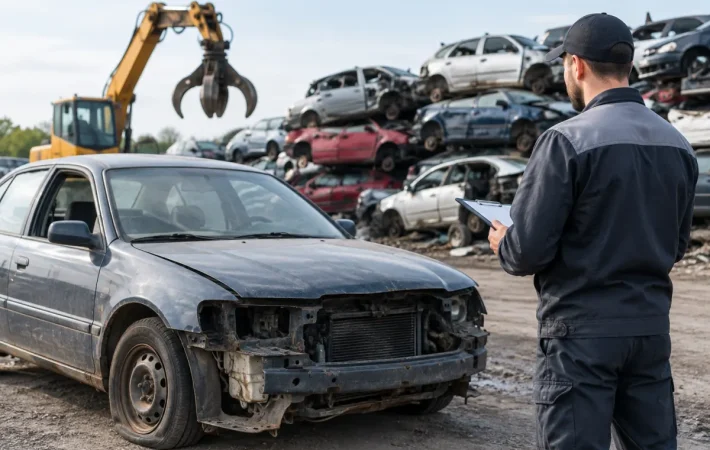
When a car arrives at a junk yard or auto recycling facility, it usually does not go straight to a crusher. The vehicle is first inspected, stored, and prepared for dismantling. The exact process depends on the car’s condition, equipment, vehicle type, the facility’s practices, and local environmental requirements.

1. The vehicle is inspected and prepared

Workers examine the car for reusable components, check for leaks, and identify materials that require separate handling. A damaged vehicle may be assessed for parts that can still be safely removed and sold.

2. Fluids and hazardous components are removed

Before the vehicle is crushed or shredded, the facility removes fluids and other potentially hazardous materials. These may include:

  • Gasoline or diesel
  • Engine and transmission oil
  • Brake and power-steering fluid
  • Coolant
  • Refrigerant from the air-conditioning system
  • Fuel tanks and batteries
  • Airbags and mercury switches

Tires and other components also require separate handling or appropriate recycling. Removing these materials helps prevent leaks, fires, and contamination during later processing.

3. Reusable parts are removed and sold

Many junk yards dismantle vehicles to recover parts that can be used in repairs. Depending on the car’s condition, workers may remove engines, transmissions, doors, hoods, body panels, seats, bumpers, catalytic converters, and tires.

Parts may be inspected, tested, cleaned, or refurbished before being sold to repair shops and individual buyers. A vehicle that is no longer roadworthy can therefore provide components for other cars.

4. The remaining shell becomes a metal hulk

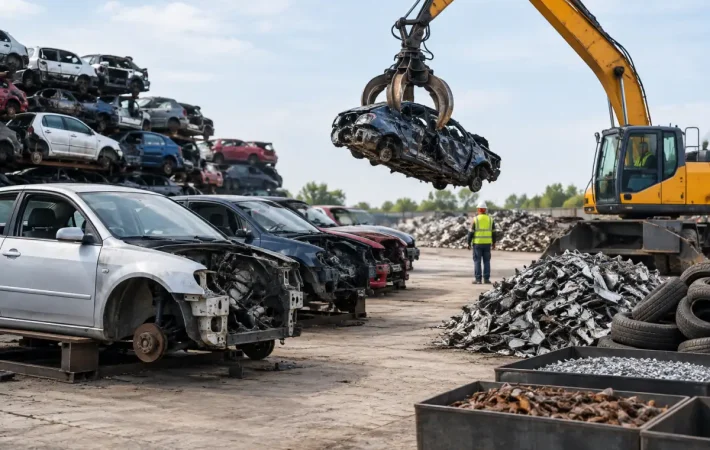
After reusable parts and hazardous materials have been removed, the remaining vehicle shell is commonly called a hulk. It usually contains a mixture of metal and nonmetallic materials and is sent to a crusher or metal shredder.

5. The car is crushed and shredded

Crushing reduces the vehicle’s size so it can be transported and processed efficiently. At a shredding facility, powerful equipment breaks the hulk into smaller pieces. Sorting systems then separate the materials by type.

  • Ferrous metals: iron and steel
  • Nonferrous metals: aluminum and copper
  • Other materials: plastic, glass, rubber, and fabric

6. Metals return to manufacturing

Steel and other recovered metals are sent to mills or foundries. They can be melted and used to manufacture new products. Metals make up approximately 75 percent of a vehicle’s weight, which is why metal recovery is one of the main purposes of auto recycling.

What happens to the materials that cannot be reused?

Some plastics, rubber, glass, fabric, and other nonmetallic materials may be recovered, depending on the facility and available processing systems. Material that cannot be economically recycled can become shredder residue and may be sent to a landfill.

There is no single outcome for every car. The amount that is reused or recycled depends on the vehicle’s model, condition, equipment, and the facility processing it. Local environmental requirements can also affect how fluids, batteries, tires, refrigerants, and other materials are handled.

How to Buy Junk Yard Cars: Where to Look and What to Check

How to Buy Junk Yard Cars: Where to Look and What to Check

Buying a car from a junk yard or salvage auction can cost less than purchasing a used vehicle through a traditional dealer, but the lower price often reflects collision, flood, hail, theft, vandalism, or other damage. The safest approach is to verify the title, inspect the vehicle, and calculate the complete cost before placing a bid or paying a junk yard.

Where to buy junk yard cars

There are three main places to look for junk yard cars in the United States:

  • Online salvage auctions: Copart and IAA list damaged, salvage, used, and some clean-title vehicles.
  • Local auto recyclers and junk yards: Some sell complete vehicles, while others offer cars mainly for parts or scrap.
  • Self-service yards: These commonly sell parts from dismantled vehicles, so confirm whether complete cars are available before visiting.

Copart

Copart operates an online auction for salvage, damaged, used, and some clean-title vehicles. The usual process is to register, search the inventory, review a listing, bid, pay, and arrange pickup or transportation. Some vehicles are available to public buyers without a business license, while other listings may require a license or a broker.

IAA

IAA lists salvage and used vehicles through online auctions. Selected vehicles are offered through IAA Buy Now, which allows an eligible buyer to purchase at a set price instead of waiting for a live auction. Availability and buyer requirements depend on the vehicle and its location.

How to find junk yard cars

  1. Search Copart and IAA by make, model, year, location, title type, and damage category.
  2. Check local auto recyclers and salvage yards to determine whether they sell complete vehicles or only parts.
  3. Review every listing for the VIN, title description, damage type, keys, vehicle completeness, and sale conditions.
  4. Confirm whether the listing is open to public buyers or requires a business license or broker.
  5. Arrange an inspection before bidding whenever the auction or yard permits it.

Because no city or state was specified, local junk-yard names, addresses, phone numbers, hours, and available inventory cannot be identified reliably. Local availability also changes frequently, so the vehicle location shown in the current listing should be verified before making travel or transportation arrangements.

Check the title and VIN before buying

A salvage title is generally issued after an insurer declares a vehicle a total loss. The exact definition, inspection process, registration rules, and title branding vary by state. Damage may result from a collision, flood, hail, theft recovery, or vandalism.

Use the VIN to obtain a vehicle history report from a provider approved through the National Motor Vehicle Title Information System, or NMVTIS. A report can include title records, insurance-loss information, salvage information, ownership history, and accident or repair records. The FTC recommends obtaining a vehicle history report before buying a used vehicle.

Pay close attention to certificates of destruction, non-repairable certificates, junk certificates, and similar brands. These vehicles may be restricted to parts or scrap and may not qualify for normal retitling.

Inspect the vehicle before bidding

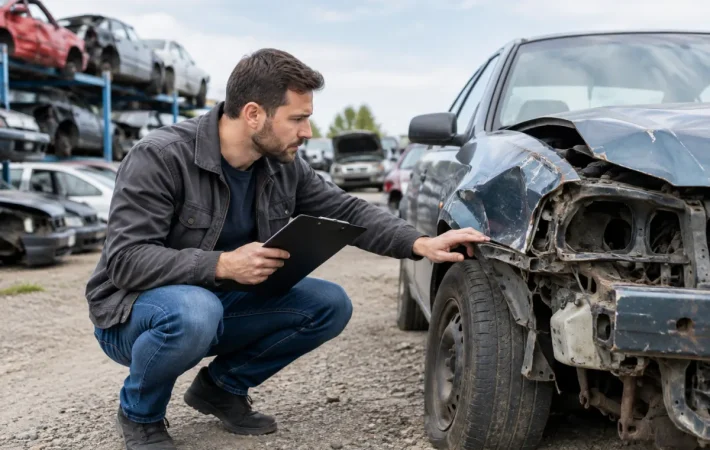
Auction photographs and descriptions are useful for initial screening, but they do not replace an in-person inspection. If you cannot inspect the car yourself, consider hiring an independent inspector who can document the following:

  • Frame, unibody, suspension, and visible structural damage
  • Flood or water intrusion, including corrosion and damaged electrical components
  • Engine, transmission, cooling system, and fluid condition
  • Airbags, seat belts, dashboard warning lights, and safety systems
  • Missing parts, keys, wheels, catalytic converter, battery, and interior components
  • Whether the VIN labels and vehicle description appear consistent

Do not assume that a vehicle described as running or starting is safe to drive. It may still need extensive mechanical, electrical, or structural repairs.

How much is a junk yard car?

There is no reliable nationwide fixed price for a junk-yard car. The amount depends on the make, model, year, title status, damage, completeness, location, auction demand, and added charges.

Calculate the total purchase cost using this formula:

Winning bid or sale price + auction fees + taxes + storage charges + transportation + inspection + repairs + title, registration, and required inspection costs.

A low winning bid can become an expensive purchase after shipping, storage, replacement parts, bodywork, diagnostic work, and title-related requirements are included. Get a transportation estimate before bidding, especially when the vehicle is located in another state or cannot be driven.

Confirm buyer and registration requirements

Some auction vehicles can be purchased by members of the public, while others require a business license or a broker. Requirements depend on the vehicle, its title type, the auction rules, and the state where the vehicle is located.

Before paying, verify:

  • Whether you are eligible to bid directly
  • Whether a broker is required
  • Whether the title can be transferred to you
  • Whether the state requires a salvage inspection before registration
  • Whether the vehicle can receive a rebuilt title or be registered for road use
  • Whether an insurer will provide the coverage you need

State rules for salvage titles, inspections, registration, insurance, and licensing must be checked for the state where you intend to title the vehicle. Insurance availability for salvage or rebuilt-title cars also varies by insurer.

A practical buying checklist

  1. Choose a vehicle with a repair cost that fits your budget.
  2. Record the VIN and review its history through an approved NMVTIS provider.
  3. Read the title and damage description carefully.
  4. Check for restricted or parts-only title brands.
  5. Inspect the vehicle personally or hire an independent inspector.
  6. Confirm public-buyer, license, and broker requirements.
  7. Estimate auction fees, taxes, transport, storage, repairs, inspection, and registration.
  8. Bid only after confirming the title and registration path in your state.
  9. Arrange pickup promptly to avoid possible storage charges.
How to Find Junk Yards Near You

How to Find Junk Yards Near You

To find a nearby junk yard, search Google Maps for junk yard along with your city, neighborhood, or ZIP code. You can also search for auto salvage yard, auto wrecker, salvage yard, scrap yard, vehicle recycling center, or automotive dismantler. These terms cover businesses that may use different names for similar services.

Where can I find junk yards?

Open Google Maps and enter a search such as junk yards near me or auto salvage yards in [your city]. Search results can show each business’s address, opening hours, phone number, directions, ratings, and customer reviews. Use the map to compare locations and check the estimated travel distance.

Results are generally influenced by relevance, distance, and prominence. Because of this, the first listing is not necessarily the closest junk yard. Review several nearby options before choosing one.

Where is the car junk yard?

For a vehicle you want to sell, recycle, or remove, search for car junk yard near me, auto wrecker near me, or vehicle recycling center near me. Contact the businesses that appear nearby and ask whether they accept your vehicle type and whether they provide vehicle removal or towing.

Auto wreckers often remove reusable parts before crushing vehicles and separating recyclable materials such as steel and other metals. A business listed as a salvage yard may focus on used parts, while a scrap yard or recycling center may focus more on metal and vehicle recycling.

What to check before visiting

  • Confirm the current opening hours and address.
  • Call to ask whether the yard accepts your vehicle, parts, or scrap metal.
  • Ask whether towing or vehicle pickup is available if the car cannot be driven.
  • Check whether you need a title or other ownership documents.
  • Ask about payment methods and any requirements for selling or donating a vehicle.
  • Read recent customer reviews, while remembering that reviews may not describe current policies or inventory.

Finding the right type of junk yard

Used car parts

Search for auto salvage yard, auto wrecker, or used auto parts yard. Ask whether the facility sells the specific part and vehicle component you need.

Scrap metal and recycling

Search for scrap yard or vehicle recycling center. Confirm which metals and vehicle materials the business accepts before making the trip.

Self-service yards

Search for self-service auto salvage yard or pull-a-part yard if you plan to remove parts yourself. Verify the yard’s access rules, equipment requirements, and accepted payment methods in advance.

Since no city, state, ZIP code, or current location is specified, a reliable list of individual nearby businesses cannot be selected. Adding a location to the search is the most direct way to identify relevant junk yards and compare their verified details.

What Parts Do Junk Yards Have? Engines, Batteries, Shipping and Buying Policies

What Parts Do Junk Yards Have? Engines, Batteries, Shipping and Buying Policies

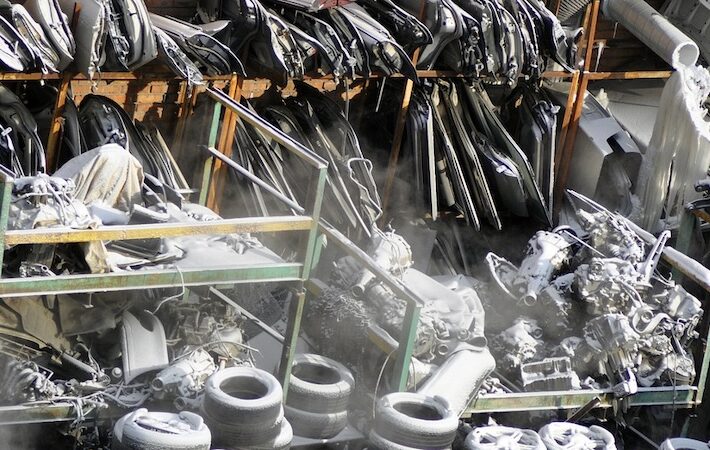
Junk yards commonly stock used engines, transmissions, body panels, interior components, electrical parts, suspension pieces and other components removed from damaged or retired vehicles. The exact inventory changes daily because parts depend on the vehicles currently in the yard and what has already been sold.

Do junk yards have engines?

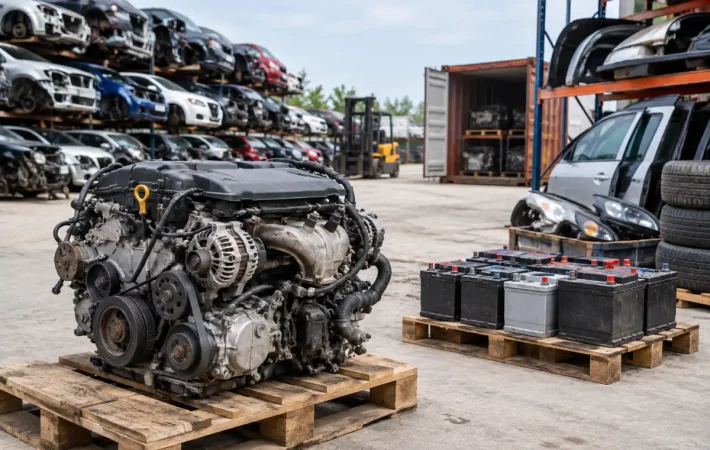
Yes. Engines are among the most common and valuable parts sold by automotive salvage yards. A yard may sell a complete engine, an engine assembly, or individual components such as cylinder heads, alternators, starters and other accessories.

Availability depends on the vehicle inventory, engine condition and whether another customer has already removed the part. Before buying, verify the vehicle year, make, model, trim, engine code and mileage when that information is available. Also ask whether the engine was tested and whether a warranty or return policy applies.

Where to find used engines

  • Pull-A-Part sells used engines, transmissions, body parts, interior parts and electrical components. Its self-service yards provide an A-frame and hoist to help customers remove engines and transmissions. Pull-A-Part does not ship parts to individuals or transfer parts between locations.
  • LKQ Pick Your Part lists engines and batteries among the parts available through its self-service recycling yards. Customers typically bring their own tools, locate a vehicle and remove the part themselves. Inventory and battery availability vary by location.
  • Car-Part.com lists used engines and other recycled components from participating automotive recyclers. Shipping, warranties, returns and delivery times are set by the individual recycler.

Do junk yards have car batteries?

Some junk yards have car batteries, but availability is less consistent than for engines or body parts. Batteries are often removed from vehicles when they arrive because they contain lead and acid. Some recycling yards sell tested batteries separately, while others send them for recycling instead of placing them in the customer-accessible inventory.

LKQ Pick Your Part advertises batteries among its available automotive parts, but the stock and purchasing rules differ between locations. Confirm the battery group size, terminal layout, condition and any available testing or warranty information before buying.

What other parts do junk yards sell?

Depending on the vehicles in stock, a junk yard may have:

  • Transmissions and transfer cases
  • Alternators, starters and other electrical components
  • Doors, hoods, fenders, bumpers and mirrors
  • Headlights, taillights and other lighting components
  • Seats, dashboards, consoles and interior trim
  • Suspension and steering components
  • Wheels and selected tires
  • Turbochargers, electronics and hybrid vehicle components

Self-service yards generally require customers to bring their own tools and remove parts themselves. Large components such as engines and transmissions may require lifting equipment or staff assistance. Row52 can help locate vehicles and parts at participating Pick-n-Pull yards, but customers generally travel to the yard, remove the part and pay at checkout.

Do junk yards ship parts?

Many full-service salvage yards and automotive recyclers ship parts, including engines and transmissions. Shipping is not universal, however. Self-service operators may require local pickup, and Pull-A-Part states that it does not ship parts to individuals.

Car-Part.com connects buyers with participating recyclers that may arrange delivery or shipping. The seller determines the shipping charge, delivery time, warranty, return terms and whether the specific part can be shipped. Heavy parts such as engines and transmissions may require freight delivery rather than ordinary parcel shipping.

Do junk yards buy old car parts?

Some do, but a junk yard is more likely to buy a complete vehicle, salvageable vehicle, scrap material or a rebuildable core than an unrelated box of old parts. Acceptance depends on condition, completeness, resale demand and the buyer’s program.

Parts with potential resale or rebuilding value may include engines, transmissions, alternators, starters, electronics, catalytic converters and selected hybrid batteries. A yard may reject parts that are damaged, incomplete, contaminated, difficult to identify or unlikely to sell.

Specialized buyers for used parts and cores

G-COR Automotive buys and processes selected automotive cores and parts, including engines, transmissions, transfer cases, alternators, starters, electronics, turbos and hybrid batteries. Its facility is at 2100 Refugee Rd., Columbus, OH 43207. Engines and other components must meet its requirements for condition, completeness, labeling and packaging, and qualifying material may be handled through shipping or pickup arrangements.

Do junk yards buy used parts?

They may buy used parts when the parts have clear identification and resale, rebuilding or core value. The buyer may ask for the part number, vehicle application, condition, completeness and proof that the part works.

Complete engines and transmissions usually have a better chance of acceptance than miscellaneous components, but no nationwide policy applies to every yard. Contact the specific recycler before transporting heavy parts to its facility.

Do junk yards buy new car parts?

Traditional junk yards generally do not focus on buying new aftermarket parts. Their main business is recycled and used vehicle components. New aftermarket parts are normally handled by automotive parts retailers.

A recycler may accept surplus inventory or new-old-stock parts through a separate program, but this is not standard. Ask whether the business buys privately supplied new parts and provide the manufacturer, part number, quantity and proof of condition.

What to check before buying or selling a part

  • Confirm the year, make, model, trim and engine or transmission type.
  • Compare the original part number and interchange information.
  • Ask whether the component was tested and whether it is complete.
  • Check the warranty, return period and any as-is terms.
  • Confirm whether the yard ships, offers pickup or requires self-service removal.
  • For an engine or transmission, ask about lifting equipment, packaging and freight delivery.
  • For a battery, verify the group size, age, testing method and terminal configuration.

Inventory, prices, warranties, shipping charges and purchasing policies vary by location. The specific yard or recycler must confirm whether a particular part is available and whether it will buy or ship it.

Can You Sell a Car to a Junk Yard Without a Title?

Can You Sell a Car to a Junk Yard Without a Title?

Yes, some junk yards buy cars without the physical title, but approval depends on your state’s rules, the vehicle’s age, your ownership documents, and the buyer’s license. There is no single nationwide rule requiring every junk yard to accept or reject a vehicle without a title.

Many yards require a title or other proof that you own the vehicle before arranging pickup. Others may accept alternative documents, such as a replacement-title application, bill of sale, transferable registration, or a state-approved ownership form.

Do junk yards buy cars with no title?

Some do, especially when the seller can provide reliable ownership documentation. A yard may also apply different rules depending on whether it is a licensed salvage dealer, dismantler, scrap processor, or used automotive parts recycler.

Before scheduling pickup, ask the specific buyer:

  • Whether a physical title is required
  • Which alternative ownership documents are accepted
  • Whether the vehicle qualifies for parts or scrap processing
  • Whether the buyer is licensed for this type of transaction
  • What identification and vehicle information must be provided

State rules can make a difference

Texas

Texas allows certain used automotive parts recyclers to purchase a vehicle without a title when it is at least 13 years old, has not been registered for at least seven years, and is bought only for parts, dismantling, or scrap. This exception does not automatically apply to every ordinary junk yard. Vehicles that do not meet the requirements generally need proper ownership evidence.

For questions about Texas requirements, contact the Texas Department of Motor Vehicles at 888-368-4689. The recycler must also complete required reporting before dismantling or scrapping the vehicle.

California

California generally requires evidence of ownership when a vehicle is junked or dismantled. If you do not have the title, the Department of Motor Vehicles may require a replacement-title application or other documents establishing ownership. A bill of sale may be accepted in some junking transactions, depending on the circumstances.

New York

New York recognizes several forms of ownership proof for junk and salvage vehicles. For certain older vehicles, Form MV-35 may be used when the vehicle is at least eight model years old and worth $1,250 or less, subject to the applicable requirements. A transferable registration or another accepted ownership document may also apply when a title is not required for that vehicle.

Documents to gather before contacting a junk yard

Having more information available can help the buyer determine whether it can legally purchase the vehicle. Prepare:

  • Government-issued identification
  • The vehicle identification number, or VIN
  • License plates or registration information
  • Any bill of sale
  • A replacement-title application, if one has been filed
  • Lien-release paperwork, when applicable

What if the car has a lien?

A vehicle with an active lien generally cannot be sold as scrap without resolving the lien or obtaining the required lien release and ownership documentation. Contact the lienholder and your state motor vehicle agency before attempting the sale.

How to check whether your car qualifies

  1. Identify your state’s title and salvage rules.
  2. Confirm whether the buyer is a licensed junk yard, dismantler, salvage dealer, or automotive parts recycler.
  3. Provide the VIN, vehicle age, registration history, and available ownership documents.
  4. Ask the buyer to confirm acceptance before arranging towing or pickup.
  5. Complete any state-required ownership transfer or reporting paperwork.

If you cannot provide a title, do not assume that a bill of sale alone is sufficient. The specific state agency and junk yard must confirm which documents are accepted for your vehicle and transaction.

How to Search Junk Yards for Parts: A Practical Guide

How to Search Junk Yards for Parts: A Practical Guide

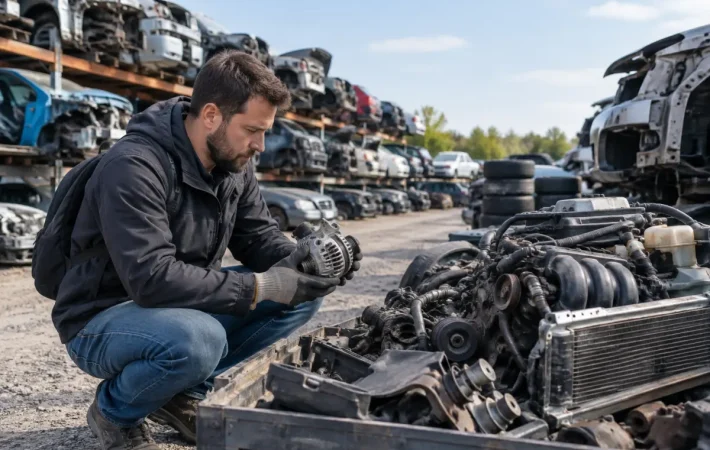
Searching junk yards for used parts is easier when you identify the right vehicle first, check online inventory, confirm compatibility and call the yard before traveling. This approach works for traditional auto recyclers and do-it-yourself junk yards where you remove parts yourself.

Start with the exact vehicle details

Before searching, write down the vehicle’s year, make, model, engine, body style and your location. These details help narrow inventory results and reduce the risk of choosing a part from an incompatible vehicle.

For a specific vehicle, search by year, make and model first. Self-service yards usually list cars currently on the lot rather than every individual part still attached to them.

How to check junk yard inventory online

  1. Enter your city, state or ZIP code, or select a nearby yard.
  2. Search by vehicle year, make and model.
  3. Review the listed vehicle, stock information and available parts data.
  4. Check more than one nearby location.
  5. Contact the yard to confirm that the vehicle and part are still available.

Inventory changes frequently. An online listing is a starting point, not a guarantee that the vehicle is still present or that the part is undamaged.

Junk yards I can buy parts from

U-Pull-&-Pay

U-Pull-&-Pay is a self-service junkyard chain with an online inventory search organized by location, make, model and year. It also provides parts-interchange search options, and its inventory database is updated every evening.

LKQ Pick Your Part

LKQ Pick Your Part provides location-based vehicle inventory searches. Listings can show a vehicle’s year, make, model, stock information and available parts data. Select the specific yard before relying on a result, since inventory is location-specific.

Car-Part.com

Car-Part.com searches inventories from thousands of auto recyclers. You can refine results by vehicle details, part type and location, and listings may include recycler information and descriptions of the part. This is useful when a nearby self-service yard does not list the vehicle you need.

JunkyardInventory.com

JunkyardInventory.com aggregates listings from multiple self-service junkyard chains. You can choose a chain, select a location and browse vehicle inventory. Its listings are updated daily, but availability should still be confirmed with the individual yard.

LKQ Corporation Location Finder

The LKQ Corporation Location Finder helps identify nearby LKQ locations by city, state or ZIP code. Filters include region, customer type, brand and business division, which can help you find a suitable location before checking its inventory.

How to find used parts in junk yards

When visiting a do-it-yourself junkyard, search for the donor vehicle rather than only the part name. Once you locate a compatible car, inspect the component yourself and determine whether it is complete, damaged or already removed.

If a small component is not listed separately, search for the larger assembly it belongs to. For example, a small door component may be attached to a door, while a sensor or bracket may still be installed on an engine, transmission, fender or other assembly. Ask the recycler whether the smaller component can be sold separately.

How to use interchange information

Interchange information identifies vehicles that may use the same part. It can expand your search beyond the exact year and model, but compatibility should be confirmed before removing a component.

Use the vehicle identification number and compare important specifications, especially for:

  • engines and transmissions;
  • electrical components and control modules;
  • body panels;
  • interior trim;
  • suspension and drivetrain parts.

Matching the same model name does not always mean that the part will fit. Engine configuration, body style, production changes and equipment options can affect compatibility.

How to find cars in junk yards

Search the yard’s inventory by location, year, make and model. Choose the exact yard rather than relying on a general chain listing, then review the vehicle record and stock details. Check several nearby locations because one yard may have a vehicle that another does not.

For a 1994 Chevrolet Caprice, search for year 1994, make Chevrolet and model Caprice across nearby locations. Review each vehicle listing, then contact the selected yard to verify that the car is still on the lot and that the needed component remains attached.

How to search junk yards for parts before traveling

  1. Define the exact part and the vehicle it must fit.
  2. Search U-Pull-&-Pay, LKQ Pick Your Part or another local inventory system.
  3. Use Car-Part.com if local self-service results are limited.
  4. Check interchange information and VIN details.
  5. Call the individual yard before leaving.
  6. Ask whether the part is still present, damaged or available for separate sale.
  7. Confirm the yard’s current rules for tools, entry, payment and vehicle access.

Rules for tools, admission, payment and entering vehicles vary by location, so they must be checked with the individual junkyard.

Do Junk Yards Buy Every Type of Car?

Do Junk Yards Buy Every Type of Car?

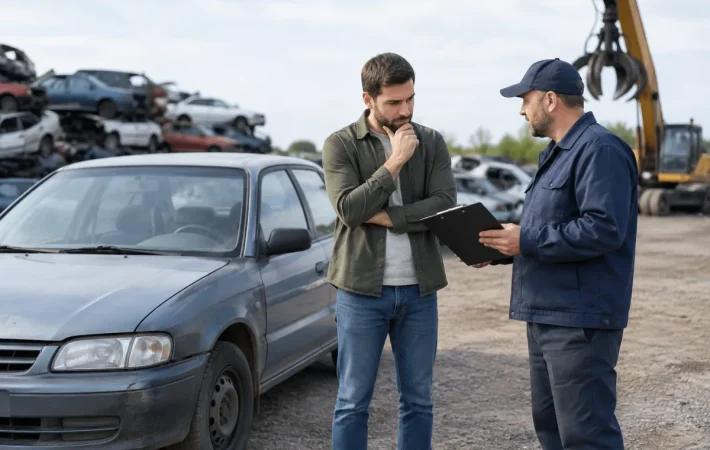
Most junk yards, auto recyclers and salvage-car buyers do not purchase every vehicle automatically, but many accept a wide range of cars and trucks. They commonly buy vehicles for reusable parts, scrap metal or resale through salvage channels, so a car usually does not have to be running or repairable.

Companies such as Junk-A-Car state that they buy junk, damaged, wrecked and non-running vehicles throughout the United States. Copart also notes that selling a totaled vehicle for parts may make more financial sense than repairing it, depending on its condition and value.

What types of cars do junk yards buy?

Wrecked and totaled cars

Many junk yards buy cars damaged in collisions, including vehicles with frame damage, deployed airbags or extensive body damage. A totaled vehicle may still contain valuable parts, or its remaining metal may have scrap value.

Acceptance depends on the buyer’s purchasing criteria, the vehicle’s completeness and whether its parts can be resold. When requesting an offer, describe the damage accurately and state whether the car is operable.

Non-running cars

Junk yards often buy cars that cannot be driven because of a failed engine, transmission or other major mechanical problem. The vehicle may still be worth money because of its engine components, transmission, catalytic converter, body panels, wheels or scrap metal.

Running cars

Some junk-car buyers purchase running vehicles as well. However, a running car in usable condition may receive a higher offer from a private buyer, used-car dealer or specialized vehicle buyer than from a junk yard.

Junk yards usually calculate an offer based on parts and scrap value rather than the vehicle’s full resale value. Comparing offers is useful when the car still runs and has a clear ownership history.

Old and high-mileage cars

Old cars and vehicles with very high mileage are common candidates for junk-car sales, especially when repair costs exceed the car’s practical value. Even when the vehicle is no longer economical to maintain, its parts and metal may retain value.

Flood-damaged cars

Some salvage buyers accept flood-damaged vehicles. Flood damage can affect the title status and transfer requirements, however, so the buyer may need specific documentation before purchasing or dismantling the car.

Do junk yards buy cars for parts?

Yes. Parts are one of the main reasons salvage yards and auto recyclers buy vehicles. A complete car with a usable engine, transmission, catalytic converter or other sought-after components may be worth more than a stripped shell.

The make, model and year also matter. A vehicle with parts that are difficult to find may attract more interest than an otherwise similar car with limited demand. Buyers may also consider whether the vehicle is complete, whether it can be transported and whether its parts are damaged.

What affects a junk-car offer?

  • Title and ownership documents: The buyer may require the title, registration or other proof of ownership.
  • Location: Towing distance and local purchasing policies can affect whether the buyer accepts the vehicle.
  • Condition: Running status, collision damage, flood damage and mechanical problems all influence the assessment.
  • Completeness: A car with its engine, transmission and other valuable components may be worth more than a dismantled vehicle.
  • Make, model and demand: Vehicles with reusable or hard-to-find parts may receive more interest.
  • Weight and scrap content: When parts have little resale value, the vehicle’s metal content becomes more important.
  • Local requirements: Title, salvage and dismantling rules vary by state.

Do you need a title to sell a junk car?

Often, yes, but the exact requirement depends on the state and the type of buyer. Copart notes that a junk yard may request the title and registration. State rules can also impose additional reporting or record requirements.

For example, the Texas Department of Motor Vehicles states that Texas used auto parts recyclers purchasing a vehicle without a title must submit a required report before dismantling it, with the stated requirement effective January 1, 2026. This illustrates why documentation rules should be checked locally before transferring a vehicle.

How to find out whether a junk yard will buy your car

  1. Gather the year, make, model and vehicle identification number.
  2. Confirm whether the car runs and whether it can be driven or must be towed.
  3. Describe collision, flood or mechanical damage honestly.
  4. List major missing parts, such as the engine, transmission or catalytic converter.
  5. Ask which title or ownership documents are required.
  6. Compare the junk-yard offer with offers from private buyers, used-car dealers or other salvage buyers when the vehicle is running or repairable.

Junk-A-Car is one national junk-car buyer that lists junk, damaged, wrecked, non-running, flood-damaged, high-mileage and running vehicles among the types it may accept. Copart is a salvage-vehicle auction and recycling marketplace that discusses selling total-loss vehicles for parts when repair is not financially practical.

There is no single nationwide rule requiring every junk yard to buy every type of car. The final decision normally depends on the vehicle’s condition, parts, title status, location, completeness and the buyer’s current purchasing policy.

How to Sell My Car to a Junk Yard: A Practical Step-by-Step Guide

How to Sell My Car to a Junk Yard: A Practical Step-by-Step Guide

Selling an unwanted vehicle to a junk yard can be a practical way to clear space and recover money from a car that is damaged, incomplete, or too expensive to repair. The process usually involves gathering ownership documents, requesting several quotes, confirming towing arrangements, and completing the required transfer paperwork.

Requirements differ by state and by business, so confirm the details with the junk yard and the applicable state DMV before handing over the vehicle.

How to sell my car to a junk yard

  1. Gather the vehicle information. Have the make, model, year, mileage, condition, location, and an honest description of missing or damaged parts ready. Mention whether the catalytic converter, wheels, battery, engine, and other major components are present.
  2. Collect your paperwork. Most sellers should be prepared to provide proof of ownership, commonly the vehicle title. A junk yard may also request photo identification, registration, a bill of sale, or a lien release.
  3. Check for liens. If a lender is listed on the title, resolve the lien or obtain documentation showing that it has been released. A junk yard may not accept the vehicle without clear ownership.
  4. Contact several buyers. Request quotes from licensed junk yards, auto recyclers, salvage yards, and vehicle-buying services. Compare the total offer rather than accepting the first price.
  5. Confirm towing terms. Ask whether pickup is included, whether there is a separate towing charge, and whether the company can access the vehicle at its current location.
  6. Complete the sale and obtain a record. Sign only the documents you understand and request a receipt or other written confirmation showing that the vehicle was transferred.

What do you need to sell a car to a junk yard?

The exact list depends on your state and the buyer, but commonly requested items include:

  • Vehicle title or other accepted proof of ownership
  • Valid photo identification
  • Registration, where required
  • Bill of sale, if required by the state or junk yard
  • Lien release, when a lender appears on the title
  • Keys, if available
  • Accurate vehicle details, including the VIN, mileage, condition, and location

Before arranging pickup, ask the junk yard exactly which documents it accepts. Some businesses may have additional requirements for vehicles with salvage or junk branding.
Where can I sell my car to a junk yard?

Potential buyers include local junk yards, auto recyclers, salvage yards, and vehicle-buying services. Search for businesses that are licensed or otherwise authorized in your area, then contact several companies for written or clearly stated offers.

When comparing junk yards who buy cars near you, check whether each quote includes towing and whether the business accepts vehicles without a title. Because no location was provided, the applicable state and local requirements must be confirmed before selecting a buyer.

What affects a junk yard’s offer?

The amount offered can depend on the vehicle’s make, model, year, condition, mileage, completeness, and location. The catalytic converter, reusable parts, and current demand for scrap metal or specific components may also affect the quote.

Give each buyer the same accurate information so the offers can be compared fairly. A vehicle that does not run may still have value because of its parts or recyclable materials.

What to do before the junk yard pickup

  • Remove personal belongings from the cabin, trunk, glove box, and storage areas.
  • Remove toll tags, parking permits, and other items connected to your accounts.
  • Ask the buyer whether you should remove the license plates.
  • Cancel or transfer insurance and registration as required.
  • Photograph the vehicle and keep copies of the title, bill of sale, receipt, and pickup paperwork.
  • Notify the state motor vehicle agency if required and complete any plate-surrender procedure.

Do not drain fuel, oil, coolant, refrigerant, or other fluids yourself unless you have the proper equipment and know the applicable safety requirements. End-of-life vehicles require proper management of fluids, batteries, tires, gas tanks, airbags, refrigerants, and certain mercury-containing components.

Handling the battery and special vehicle types

Do not place a lead-acid automotive battery in household trash or a municipal recycling bin. Return it to a battery retailer or use a local household hazardous-waste program.

Electric and hybrid vehicles may require specialized handling because their high-voltage lithium-ion battery packs can be hazardous. Do not remove or discard such a battery without guidance from the manufacturer, a qualified dealer, or an appropriately equipped recycler.

State paperwork after the sale

State rules are not uniform. Depending on where the vehicle is registered, you may need to notify the DMV, surrender the plates, submit a notice of sale, or keep specific transfer records. Check the applicable state DMV instructions and make sure the buyer’s paperwork accurately records the vehicle transfer.

How Much Do Junk Yards Pay for Cars?

How Much Do Junk Yards Pay for Cars?

Junk yards do not pay one fixed nationwide price for every vehicle. The amount you can get depends on the car’s weight, condition, completeness, reusable parts, local scrap-metal prices, towing requirements, and whether the buyer plans to sell parts or process the vehicle only as scrap.

Recent junk-car offers can range from about $100 for a stripped older vehicle to more than $1,500 for a heavier, complete vehicle. These figures are broad examples, not guaranteed prices for every location or car.

How much do junk yards usually pay for cars?

A vehicle sold strictly for scrap is mainly valued by its metal weight. One published reference from JD Power cites approximately $125 per ton for a complete car as a scrap-value reference, while noting that scrap prices fluctuate with market conditions.

In practice, a junk yard may offer more than the basic metal value when the car contains parts that can be reused or resold. A complete vehicle with an intact engine, transmission, catalytic converter, battery, wheels, and other valuable components generally has more potential value than a stripped shell.

  • Stripped older car: offers may be around $100, depending on weight and local prices.
  • Complete standard vehicle: the offer may reflect both scrap metal and recoverable parts.
  • Heavy, complete vehicle: some offers can exceed $1,500 when parts demand and local pricing are favorable.

What determines how much a junk yard will pay?

Vehicle weight

Heavier vehicles contain more metal, so they can produce a higher scrap payment than small cars, all else being equal. Scrap-metal prices in the local market also affect the amount the buyer can offer.

Completeness

A complete car is usually worth more than one missing major components. Removing the engine, transmission, catalytic converter, battery, wheels, or other parts can reduce the offer because the buyer loses both resale value and material.

Make, model, and year

Some vehicles have parts that are easier to resell or are in greater demand. A desirable model may therefore receive a higher offer than another car with a similar weight but fewer marketable components.

Condition and repairability

A damaged vehicle may be worth more as a salvage car than as basic scrap if it has repairable damage or valuable parts. A buyer evaluates whether the car should be dismantled for components or processed primarily for metal.

Location and towing

The distance to the vehicle, its accessibility, and the cost of transporting it can affect the final amount. Free towing may be included in some offers, but the buyer can adjust the payment for location, transport requirements, or problems that were not disclosed.

Title and vehicle documentation

Title and transfer requirements vary by state. A buyer may need specific documentation before completing the purchase, and the available payment or transfer process can depend on local rules.

How much is my car worth to a junk yard?

To estimate how much you can get for a car at a junk yard, gather the vehicle’s year, make, model, condition, mileage, location, title status, and information about missing or usable parts. Note whether the engine, transmission, catalytic converter, battery, wheels, and other major components are still present.

A complete vehicle with desirable parts may receive an offer above its bare scrap value. A stripped or heavily damaged vehicle is more likely to be priced mainly by weight. The same car can receive different offers from different buyers because junk yards have different processing costs, parts demand, towing distances, and regional metal prices.

Do junk yards pay you for your car?

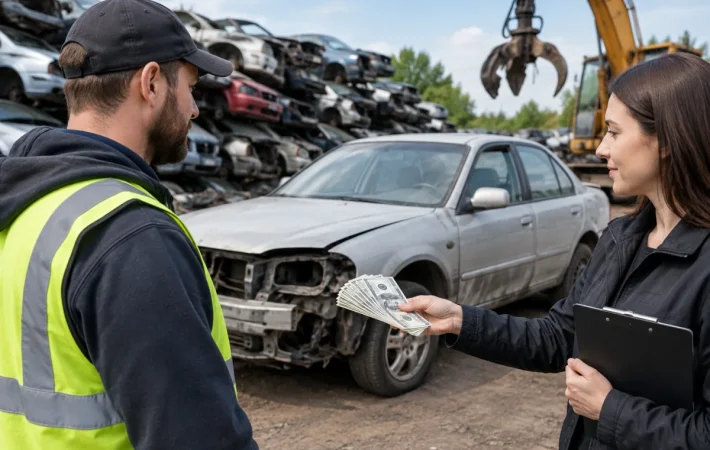
Yes. Junk yards, salvage yards, and junk-car buyers commonly purchase vehicles and pay the seller after confirming the car’s condition, documentation, and ownership. The payment amount is determined by the buyer’s inspection or the information provided when requesting an offer.

Ask whether the quoted amount includes towing and whether any deductions apply. Confirm the required title or other documents before arranging the vehicle transfer, since requirements vary by state.

How to compare junk-car offers

  1. Describe the vehicle accurately, including missing parts and damage.
  2. Provide the year, make, model, location, and title status.
  3. Ask whether towing is included in the quoted amount.
  4. Confirm whether the price is final or subject to an inspection.
  5. Compare the payment, pickup terms, documentation requirements, and timing.
There is no universal answer to how much junk yards are paying for cars near you. A realistic offer depends on the vehicle’s scrap weight, reusable parts, condition, local market, and pickup cost. For many cars, the difference between a low and high offer comes from whether the buyer sees the vehicle as a source of parts or only as scrap metal.

Toyota Parts Tampa

Toyota Parts Tampa

For those who seek precision that aligns with the original specifications, our OEM parts for Toyota in Tampa are the epitome of perfection.

Tampa Junkyard

Tampa Junkyard

In the vibrant automotive landscape of Tampa, there exists a hidden gem – the Tampa Junkyard.

Nissan Parts Tampa

Nissan Parts Tampa

In the heart of Tampa, we unveil the world of Nissan Parts – a haven for enthusiasts seeking top-notch quality.

Florida Car Parts

Florida Car Parts

Let’s dive into the world of auto salvage yards, junkyards, and the allure of Used Car Parts in Florida.

Nissan Engine

Discover the allure of Used Nissan Engines for Sale and why USA.Parts is your go-to destination.

Bmw engine

Bmw engine

Let’s explore the world of Used BMW Engines for Sale and why choosing USA.Parts is a game-changer.

Cheap auto parts

Cheap auto parts

If you’re on the hunt for affordable car components without compromising on quality, you’re in the right place. Let’s explore how USA.Parts makes luxury and reliability accessible to everyone.

Engine repair

Engine repair

Welcome to USA.Parts, your premier destination for high-quality used car parts in Tampa, FL.

Car Body Parts

Car Body Parts

 Whether you’re looking to revamp your vehicle or need a specific auto body part, we’ve got you covered.

Brandon Salvage Yard

Brandon Salvage Yard

Are you a car enthusiast in Brandon, FL, looking for a reliable source of high-quality used car parts? Look no further!

Auto Salvage

Auto Salvage

Today, we’re excited to shine a spotlight on our Auto Salvage Yard, a treasure trove of automotive possibilities serving Tampa, Lakeland, Clearwater, New Port Richey, and the entire Tampa Bay area. Let’s explore the world of salvaged parts and how our yard is paving the way for sustainable driving.
Auto Repair

Auto Repair

In this blog post, we’ll explore the comprehensive auto repair services we provide in Tampa, Bradenton, Clearwater, Lakeland, St. Petersburg, and the surrounding communities.

Auto Recyclers​

Auto Recyclers

In this blog post, we’ll delve into the significance of auto recyclers in our region, emphasizing their role in promoting sustainability and providing cost-effective solutions for drivers.

Auto Parts Tampa Bay

Auto Parts Tampa Bay

Welcome to Auto Parts Tampa Bay – your go-to destination for quality used car parts in the vibrant and bustling region of Tampa, Brandon, Clearwater, St. Petersburg, and surrounding areas. In this blog post, we’ll explore the benefits of choosing replacement auto parts to save money and maintain your vehicle without breaking the bank.

Search for products

Back to Top
Product has been added to your cart