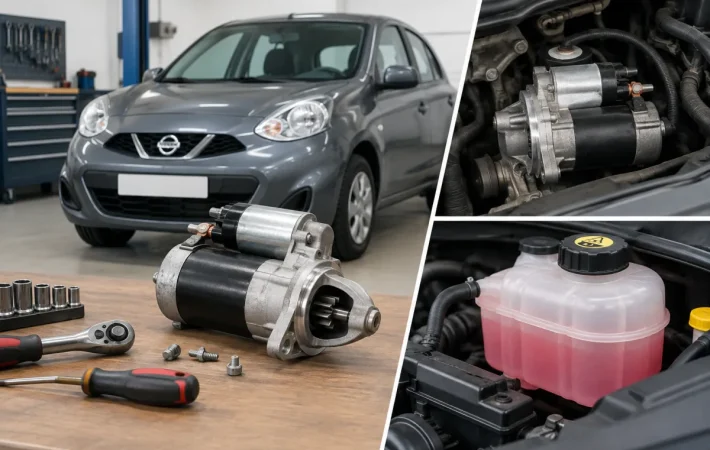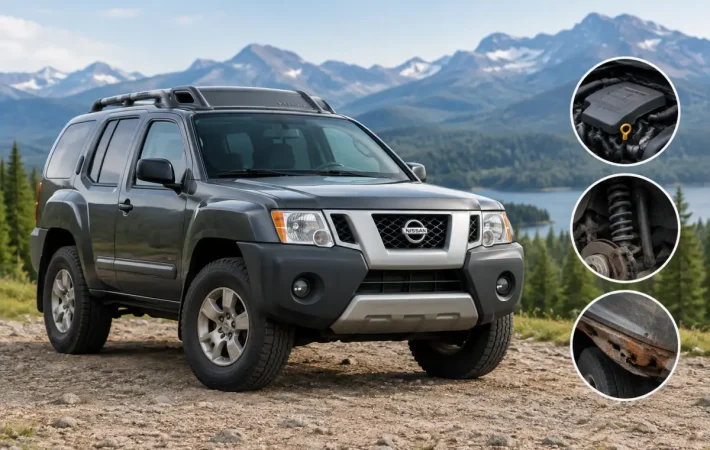
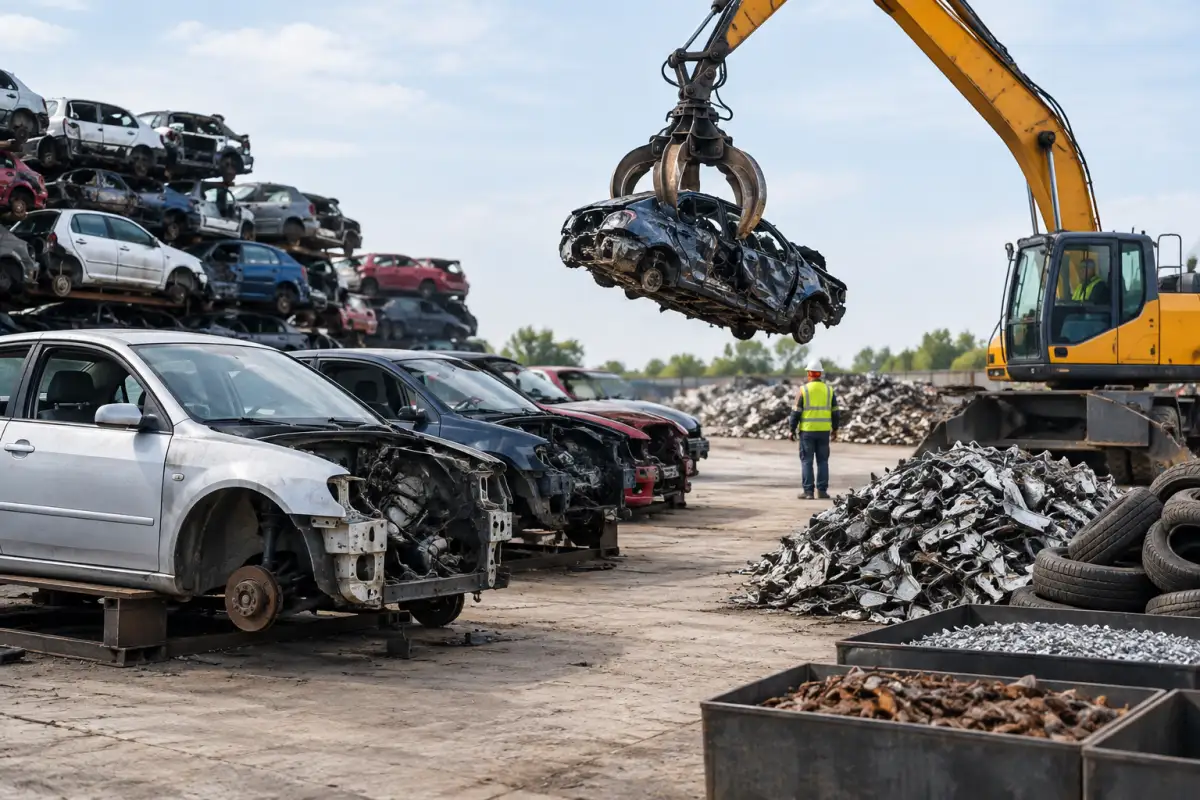
When a car arrives at a junk yard or auto recycling facility, it usually does not go straight to a crusher. The vehicle is first inspected, stored, and prepared for dismantling. The exact process depends on the car’s condition, equipment, vehicle type, the facility’s practices, and local environmental requirements.
1. The vehicle is inspected and prepared
Workers examine the car for reusable components, check for leaks, and identify materials that require separate handling. A damaged vehicle may be assessed for parts that can still be safely removed and sold.
2. Fluids and hazardous components are removed
Before the vehicle is crushed or shredded, the facility removes fluids and other potentially hazardous materials. These may include:
- Gasoline or diesel
- Engine and transmission oil
- Brake and power-steering fluid
- Coolant
- Refrigerant from the air-conditioning system
- Fuel tanks and batteries
- Airbags and mercury switches
Tires and other components also require separate handling or appropriate recycling. Removing these materials helps prevent leaks, fires, and contamination during later processing.
3. Reusable parts are removed and sold
Many junk yards dismantle vehicles to recover parts that can be used in repairs. Depending on the car’s condition, workers may remove engines, transmissions, doors, hoods, body panels, seats, bumpers, catalytic converters, and tires.
Parts may be inspected, tested, cleaned, or refurbished before being sold to repair shops and individual buyers. A vehicle that is no longer roadworthy can therefore provide components for other cars.
4. The remaining shell becomes a metal hulk
After reusable parts and hazardous materials have been removed, the remaining vehicle shell is commonly called a hulk. It usually contains a mixture of metal and nonmetallic materials and is sent to a crusher or metal shredder.
5. The car is crushed and shredded
Crushing reduces the vehicle’s size so it can be transported and processed efficiently. At a shredding facility, powerful equipment breaks the hulk into smaller pieces. Sorting systems then separate the materials by type.
- Ferrous metals: iron and steel
- Nonferrous metals: aluminum and copper
- Other materials: plastic, glass, rubber, and fabric
6. Metals return to manufacturing
Steel and other recovered metals are sent to mills or foundries. They can be melted and used to manufacture new products. Metals make up approximately 75 percent of a vehicle’s weight, which is why metal recovery is one of the main purposes of auto recycling.
What happens to the materials that cannot be reused?
Some plastics, rubber, glass, fabric, and other nonmetallic materials may be recovered, depending on the facility and available processing systems. Material that cannot be economically recycled can become shredder residue and may be sent to a landfill.
There is no single outcome for every car. The amount that is reused or recycled depends on the vehicle’s model, condition, equipment, and the facility processing it. Local environmental requirements can also affect how fluids, batteries, tires, refrigerants, and other materials are handled.