Identifying a Ford Mustang usually starts with the generation, then narrows down the model year, body style and trim. Without a vehicle photo, VIN or model-year clue, it is not possible to identify one exact Mustang, but the design details below can quickly narrow it down.
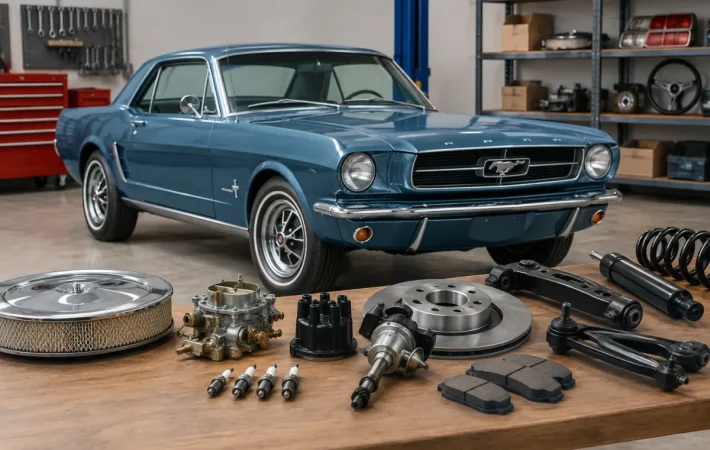
USA PARTS, a junkyard in Tampa, Florida, sells OEM used parts and can be a practical source when you need a replacement component for an identified Mustang. It is located at 4906 Trenton St, Tampa, FL 33619, and can be reached at +1 727 231-4444.
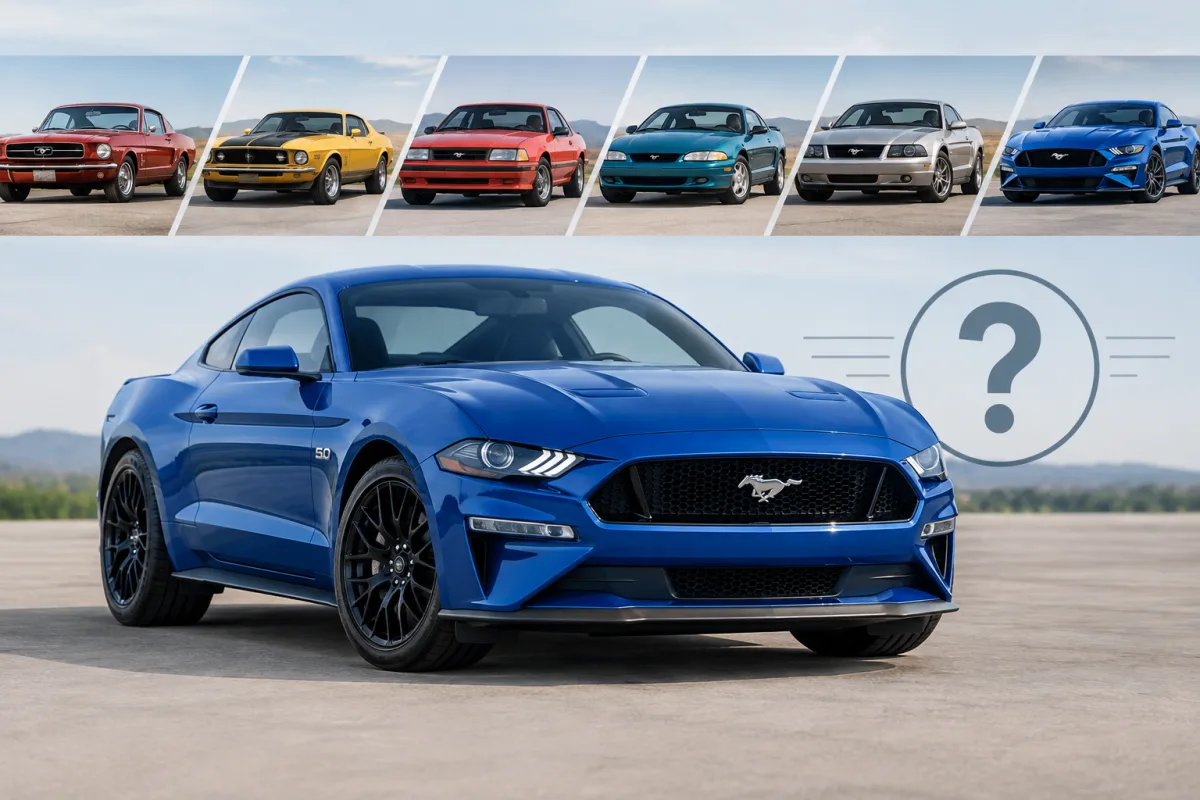
Ford Mustang generations at a glance
- First generation: 1965–1973 model-era cars, introduced in 1964 for the 1965 model year.
- Mustang II: 1974–1978.
- Third generation: 1979–1993.
- Fourth generation: 1994–2004.
- Fifth generation: 2005–2014.
- Sixth generation: 2015–2023.
- Seventh generation: the current generation.
How to identify the Mustang generation
First-generation Mustang: 1965–1973
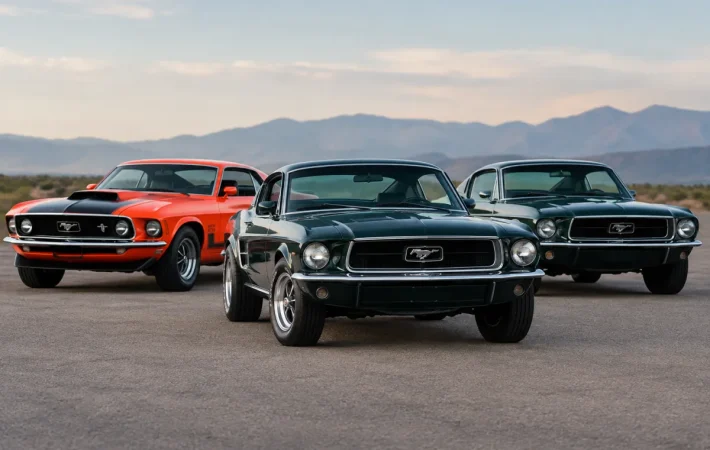
The original Mustang has a narrow grille, round headlights, a long hood and vertical three-section taillights. Ford offered hardtop, convertible and fastback body styles. The car was publicly unveiled at the New York World’s Fair on April 17, 1964, as a 1965 model.
A fastback roofline, classic chrome details and the original three-section rear lights strongly suggest a first-generation Mustang. Exact identification still requires attention to the model year because the front and rear design changed during this period.
Ford Mustang II: 1974–1978
The Mustang II is noticeably smaller and more compact than the original car. Its angular 1970s styling and reduced proportions make it one of the easiest generations to separate from earlier and later Mustangs.
Third-generation Mustang: 1979–1993
Third-generation Mustangs use the Fox-platform design. Earlier examples have a more squared-off appearance, while later cars feature more aerodynamic front and rear styling. Common versions include the Mustang GT, LX 5.0 and Cobra.
A boxy profile, rectangular lighting and an available 5.0 or GT identity point toward this generation. The exact year may require checking the front bumper, grille, taillights and dashboard.
Fourth-generation Mustang: 1994–2004
Early fourth-generation cars have rounded styling. The 1999 facelift introduced sharper body lines and revised front and rear details. The Cobra and Mach 1 are notable performance versions, with the Mach 1 returning for 2003.
When the car has a rounded 1990s shape but sharper details around the nose and rear, it may be a post-1999 fourth-generation Mustang.
Fifth-generation Mustang: 2005–2014
The fifth-generation Mustang debuted for the 2005 model year and used retro-inspired styling influenced by the original car. Typical features include a prominent grille, side hockey-stick contours and tri-bar taillamps.
GT, Shelby GT500 and Bullitt versions belong to this generation. The overall shape is more modern than a classic Mustang, but the grille, rear lights and side contours deliberately recall the original design.
Sixth-generation Mustang: 2015–2023
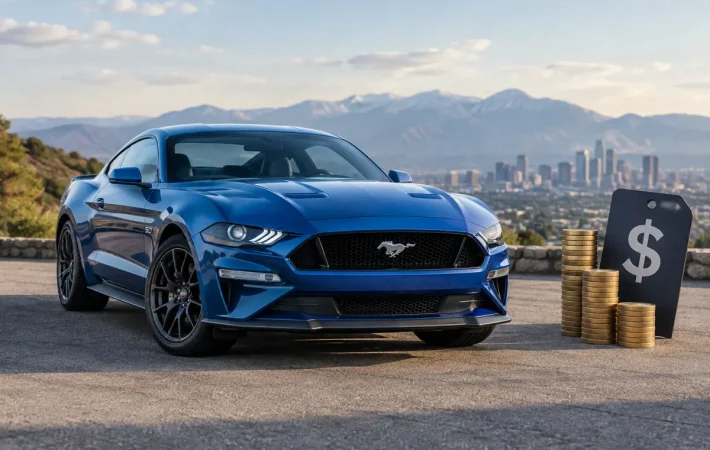
The sixth-generation Mustang debuted for the 2015 model year. It has a lower, wider-looking profile, a modern grille and slim tri-bar taillights. This was the first Mustang generation with independent rear suspension across the lineup.
Check the front lighting, fastback roofline, rear lamp design and interior layout to distinguish it from the fifth-generation car. The badge may then identify a GT, Shelby, Bullitt or another version.
Seventh-generation Mustang
The current Mustang is the seventh-generation model. It continues as a conventional Mustang coupe or convertible. Its modern front fascia, updated interior and revised rear styling help distinguish it from the sixth generation.
The Mustang Mach-E should not be confused with the conventional Mustang coupe or convertible. The Mach-E is a separate all-electric SUV model.
How to identify the Mustang trim
Generation and trim are different. A badge such as GT, Mach 1, Bullitt, Boss, Cobra, Shelby or Dark Horse identifies a specific version, not the basic generation by itself.
- GT: a performance-oriented Mustang designation used across multiple generations.
- Cobra: a performance name associated with notable third- and fourth-generation versions.
- Shelby: used for high-performance variants, including the Shelby GT500.
- Mach 1: a special performance version that returned for 2003 and was also used on later Mustangs.
- Bullitt: a special edition connected with the classic film-inspired Mustang theme.
- Boss: a performance-oriented special-edition name.
- Dark Horse: a current-generation performance designation.
Details to photograph for a reliable identification
For a precise answer, collect several views rather than relying on one badge or one body panel:
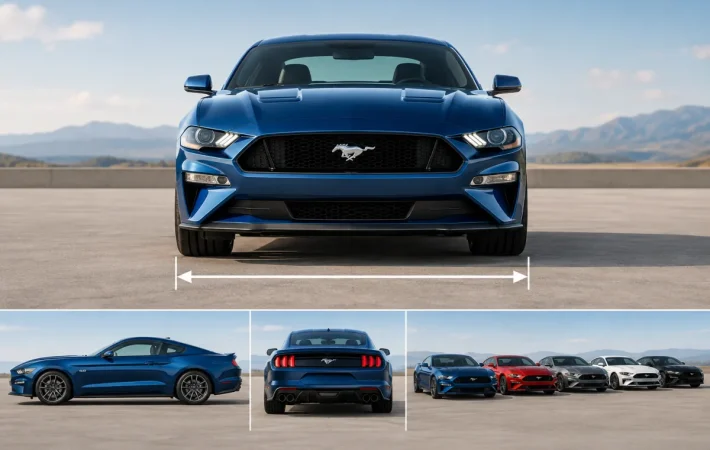
- Photograph the complete front end, including the grille, headlights and hood.
- Take a clear image of the rear lights and trunk or hatch area.
- Capture the side profile and roofline to distinguish coupe, convertible and fastback forms.
- Photograph every badge, including GT, Cobra, Shelby, Mach 1, Bullitt, Boss or Dark Horse markings.
- Check the dashboard, steering wheel and center console for generation-specific design details.
- Record the VIN or model-year information when available.
These details can separate a Mustang generation from a facelift or special edition and are also important when selecting replacement parts. For OEM used Mustang components in the Tampa area, USA PARTS is located at 4906 Trenton St, Tampa, FL 33619. Call +1 727 231-4444 with the vehicle details before searching for a part.