Learning how to draw a Ford Mustang starts with its distinctive proportions. Whether you choose a classic model or a modern Mustang, focus first on the long hood, short rear deck, low roofline and powerful front end. These features make the car recognizable before you add smaller details.
Materials for the Mustang sketch
- Pencil or mechanical pencil
- Eraser
- Paper or a drawing tablet
- Fine liner or darker pencil for the final contours
- Reference images of the Mustang style you want to draw
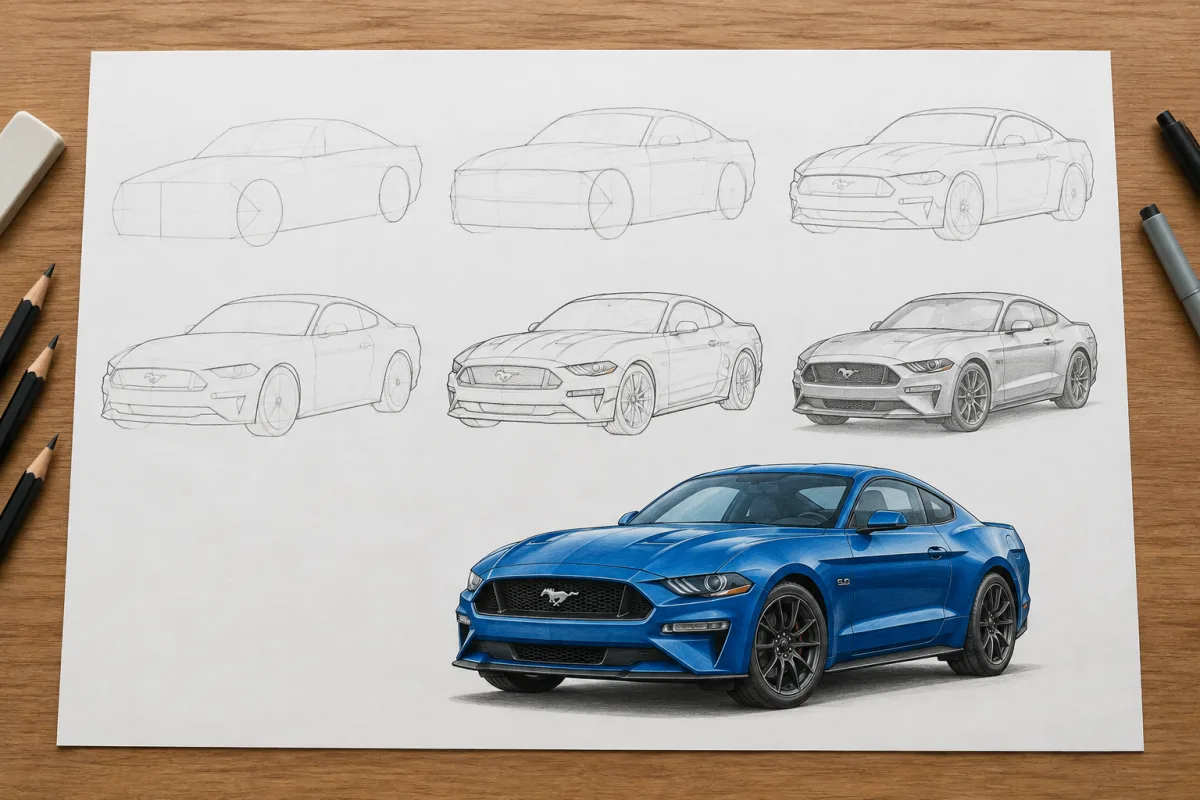
How to draw a Ford Mustang step by step
1. Choose the view and model
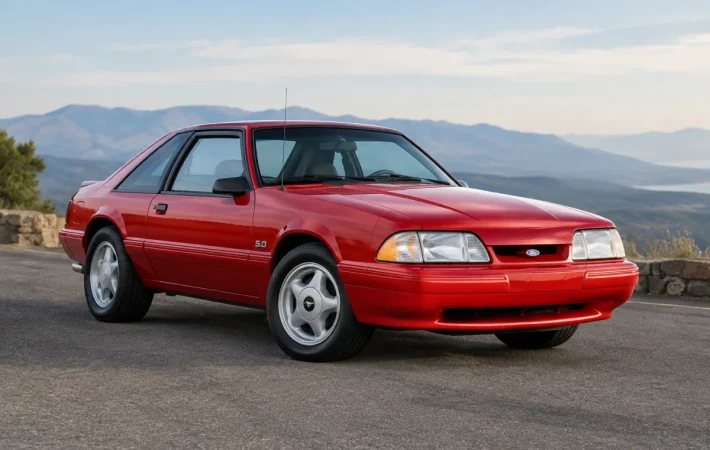
Decide whether you want a side view, front view or three-quarter perspective. You can also choose between a classic Mustang silhouette and a modern version. The Mustang has been produced in fastback coupe and convertible body styles, so the roofline will change depending on your choice.
2. Block in the main proportions
Draw a light horizontal line for the ground and place two circles for the wheels. Leave enough space between them for the doors and side panels. Connect the wheels with a long, slightly curved body shape. Keep the front section longer than the rear section to establish the Mustang’s characteristic long-hood, short-deck proportions.
3. Build the hood, roof and rear deck
Extend the hood forward from the front wheel and draw a low hood line. From the windshield, create a smooth roofline that slopes toward the rear deck. For a fastback, continue the roof in a flowing curve toward the trunk. For a convertible, draw a lower open cabin instead.
4. Add the windows
Inside the upper body, outline the windshield and side windows. Keep the windshield angled rather than vertical. Divide the side glass from the windshield with a narrow pillar, then shape the rear side window to follow the roofline.
5. Sketch the doors and wheel arches
Draw the door seams with light lines that follow the body perspective. Add the front and rear wheel arches around the circles you created earlier. Make the arches slightly wider than the wheels so the body does not look compressed.
6. Shape the front grille and headlights
The grille is one of the Mustang’s most recognizable details. On a three-quarter view, place it on the front plane as a broad, slightly curved opening. Add the headlights on either side, keeping them aligned with the hood and grille. Modern Mustang designs use defined hood sections and distinctive LED headlamp shapes, while classic versions have a simpler front arrangement.
7. Refine the body contours
Add the shoulder line along the side of the car, then sketch the lower door contour and rocker panel. Use longer, confident strokes for the hood and roof. The front fenders should appear fuller than the central door area, giving the car a muscular stance.
8. Add wheels, mirrors and handles
Replace the construction circles with clean tire outlines. Draw the rims as ellipses that match the angle of the car. Add the side mirrors near the front of the windows and place the door handles along the upper door line.
9. Finish the details
Depending on the model, add the Mustang grille emblem, rear spoiler, bumper openings, hood vents or convertible top details. Avoid adding every feature at once. Compare each detail with the chosen reference so the design remains consistent.
10. Clean and shade the drawing
Erase the guide lines after the main contours are correct. Darken the outer silhouette and the most important panel gaps. Shade beneath the car, inside the wheel arches and along the lower doors. A darker windshield and side glass will make the body look more three-dimensional.
Tips for a more accurate Mustang drawing
- Keep the hood visibly longer than the cabin.
- Use a low roofline to avoid making the car look like a sedan.
- Check that both wheels sit on the same ground line.
- Make the grille and headlights follow the perspective of the front end.
- Use fewer, cleaner lines instead of outlining every reflection.
- Study the differences between classic and modern Mustang front ends before adding signature details.
If you are using a real vehicle as a reference, USA PARTS in Tampa, Florida, sells OEM used parts. The junkyard is located at 4906 Trenton St, Tampa, FL 33619, and can be reached at +1 727 231-4444. Original vehicle components can also help artists study authentic shapes and proportions when developing automotive sketches.