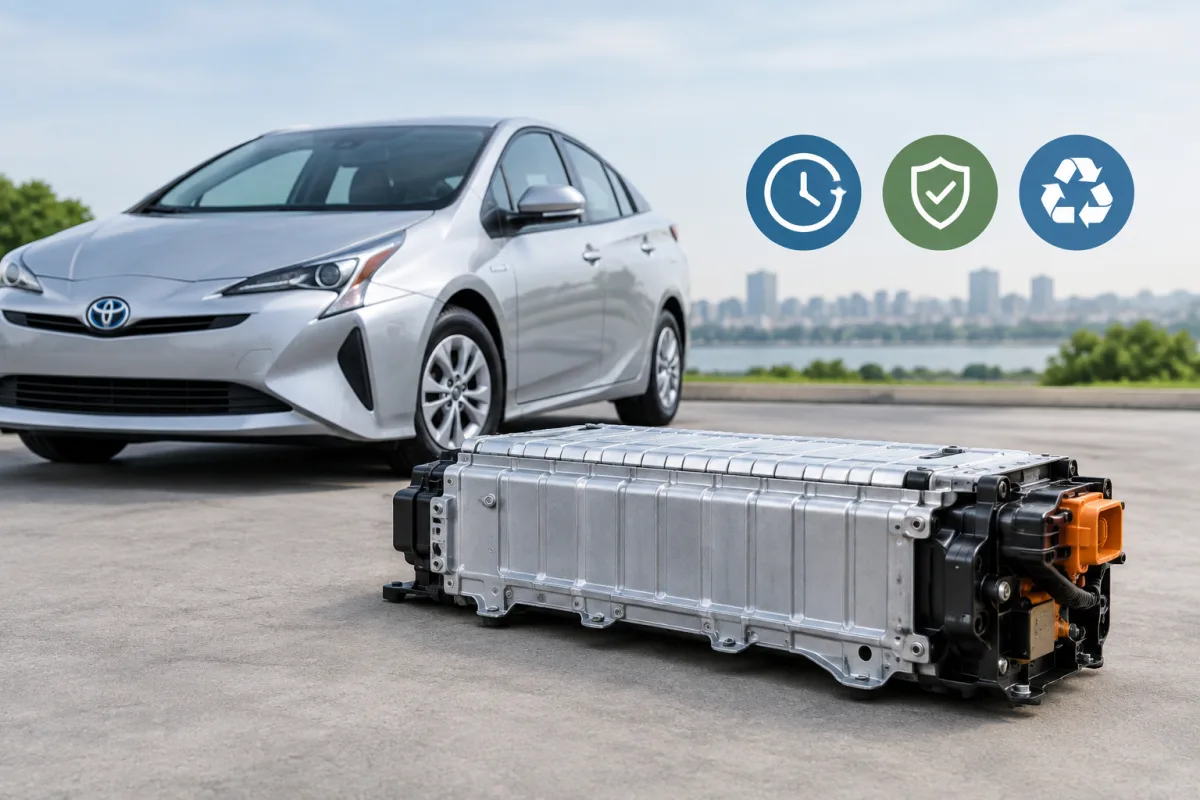
How long do Toyota hybrid batteries last? Toyota does not publish one universal service-life estimate that applies to every hybrid model. The actual lifespan depends on the vehicle, model year, operating conditions, maintenance, and the condition of the battery system.
A Toyota hybrid battery is designed for long-term vehicle use. Reaching the end of the warranty period does not mean the battery will fail immediately, and the warranty limit is not a prediction that every battery will last exactly that long.
Toyota hybrid battery warranty period
For Toyota hybrid vehicles beginning with the 2020 model year, the high-voltage hybrid battery is covered for 10 years from the vehicle’s original date of first use or 150,000 miles, whichever comes first.
The coverage is measured from the vehicle’s original in-service date. It does not restart when the vehicle is sold to a later owner. Warranty repairs generally address eligible defects in materials or workmanship and remain subject to the applicable warranty guide, exclusions, and other terms.
What about older Toyota hybrids?
Earlier Toyota hybrid vehicles generally had an 8-year or 100,000-mile hybrid battery warranty. The exact coverage can vary according to the model year, vehicle, warranty guide, and applicable emissions requirements.
When checking a used Toyota hybrid, identify the vehicle’s model year and original date of first use before estimating how much warranty coverage may remain. The purchase date of a used vehicle is not the starting point for the original battery warranty.
Does the warranty period show the battery’s actual lifespan?
No. A 10-year/150,000-mile warranty is a coverage limit, not a guaranteed failure date. Some batteries may require service before that point, while others may continue operating beyond the warranty period.
Toyota also lists separate warranty coverage for other hybrid components, including the battery control module, hybrid control module, and inverter with converter. These components are generally listed with 8-year/100,000-mile coverage, while the high-voltage battery may have longer coverage under applicable warranty or emissions rules.
Factors that affect Toyota hybrid battery service life
- Model year and battery design: Toyota has used different hybrid systems and battery configurations across its vehicles.
- Operating conditions: Temperature, driving conditions, and vehicle use can affect the demands placed on the hybrid system.
- Maintenance and cooling: The battery cooling system and related components must remain in suitable condition for proper operation.
- Vehicle history: Long periods of storage, accident damage, or other system faults may affect battery performance.
- Overall hybrid-system condition: A warning light or performance change may involve a component other than the battery itself.
When should a Toyota hybrid battery be checked?
A battery inspection is appropriate when the vehicle displays a hybrid-system warning, loses expected fuel economy, shows unusual changes in battery charge levels, or experiences reduced hybrid assistance. These symptoms are not proof that the high-voltage battery has failed. A qualified Toyota service department should diagnose the vehicle and identify the affected component.
Replacement decisions should be based on diagnostic results, the vehicle’s model year, warranty status, and the condition of the rest of the hybrid system. Toyota does not publish one replacement price that applies to every model, so the cost must be assessed for the specific vehicle and repair provider.
How to estimate remaining Toyota hybrid battery coverage
- Confirm the Toyota model and model year.
- Find the vehicle’s original date of first use or in-service date.
- Check the mileage against the applicable warranty limit.
- Review the warranty guide and maintenance documentation for that vehicle.
- Have warning messages or suspected battery problems diagnosed by qualified Toyota service personnel.
For 2020-and-newer Toyota hybrid vehicles, the main planning figure is 10 years or 150,000 miles from the original date of first use, whichever comes first. For older models, the former 8-year/100,000-mile term is a useful general reference, but the vehicle’s specific warranty documents determine the applicable coverage.