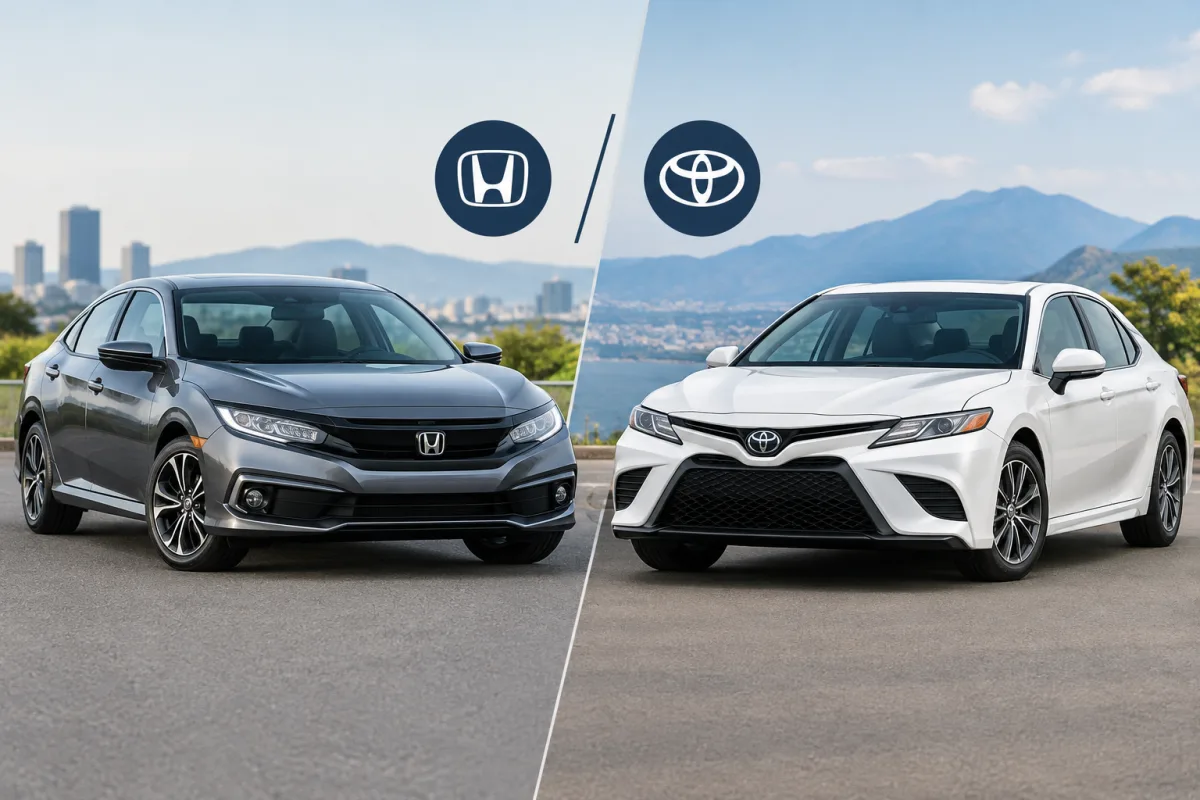
Whether Honda or Toyota is better depends on the model, powertrain and ownership priorities. Toyota currently has stronger evidence for overall dependability, while Honda remains highly competitive and may offer a better match for drivers who value handling, cabin practicality or the pricing of a specific model.
Is Honda or Toyota more reliable?
For overall dependability, Toyota has the stronger result in the latest cited J.D. Power U.S. Vehicle Dependability Study. In the 2025 study, Toyota ranked third among mass-market brands with 162 problems per 100 vehicles. Toyota also had the highest-ranked model in the study, the Toyota Avalon.
Honda was not listed among the highest-ranked mass-market brands in the cited release. That does not mean every Toyota is more reliable than every Honda. Reliability can vary substantially by model, engine, transmission, hybrid system, maintenance history and model year.
Historical reliability scores also describe reported problems from surveyed vehicles. They are useful for comparing trends, but they do not guarantee that every new Honda or Toyota will have the same ownership experience.
Is Toyota or Honda better for value?
Toyota is often the stronger choice for buyers who prioritize long-term dependability evidence, hybrid availability and lower perceived ownership risk. The 2026 Toyota Camry, for example, is offered exclusively with hybrid powertrains, making it a direct alternative to the Honda Accord for shoppers interested in a hybrid midsize sedan. Toyota also provides ToyotaCare scheduled maintenance for two years or 25,000 miles with the Camry.
Honda can offer better value when its purchase price, equipment, driving characteristics and interior layout fit the buyer better. The 2026 Honda Accord starts at an MSRP of $28,395. Its LX and SE trims use a 192-horsepower 1.5-liter turbocharged engine and are rated at 29 city and 37 highway mpg.
Actual value depends on trim level, incentives, financing, insurance, annual mileage, fuel prices and dealer pricing. A lower purchase price does not automatically mean lower total ownership cost.
Toyota Corolla versus Honda Civic
The Toyota Corolla and Honda Civic are the most relevant compact-car comparison. The Civic is a strong choice for buyers who place greater emphasis on driving feel and practical cabin space. Kelley Blue Book estimates a five-year cost to own of $42,067 for a 2025 Honda Civic, including estimated maintenance costs of $4,123 and depreciation of $13,356.
That figure should not be compared with a Toyota estimate unless the vehicles use the same trim, mileage, financing assumptions, insurance profile and powertrain. For a fair decision, compare similarly equipped Corolla and Civic models and include the local purchase price and expected insurance cost.
Toyota Camry versus Honda Accord
The Toyota Camry is the better fit for shoppers specifically seeking a hybrid-only midsize sedan and placing a high priority on Toyota’s dependability record. The 2026 Camry’s hybrid-only lineup also simplifies the powertrain decision.
The Honda Accord remains competitive for buyers who prefer its available powertrain choices, driving character, cabin design or starting price. The 2026 Accord starts at $28,395, while the LX and SE versions use a 192-horsepower 1.5-liter turbocharged engine with EPA ratings of 29 city and 37 highway mpg.
Toyota RAV4 versus Honda CR-V
The Toyota RAV4 and Honda CR-V are the key comparison for compact SUV buyers. The available research does not establish a single current winner between these two models on total ownership cost or every reliability measure. The better choice should be based on the exact model year, trim, powertrain, warranty terms, dealer pricing, insurance quote and maintenance history for used vehicles.
Toyota is the more defensible choice when dependability evidence and hybrid availability are the main priorities. Honda may be preferable when the CR-V’s cabin practicality, driving feel or transaction price better matches the buyer’s needs.
Which brand should you choose?
- Choose Toyota if your main priorities are dependability evidence, hybrid-focused options, resale confidence and minimizing ownership risk.
- Choose Honda if you place more weight on driving characteristics, interior practicality or the price and equipment of a particular model.
- Compare model by model rather than choosing a brand solely from its reputation.
- Check the exact powertrain, since hybrid and gasoline versions can have different costs, performance and maintenance considerations.
- For used vehicles, inspect maintenance records because condition and service history can matter more than the badge.
For the broad question “is Honda or Toyota better,” Toyota has the stronger current case for overall dependability. Honda is still a competitive alternative, especially with models such as the Civic and Accord. The most accurate decision comes from comparing the specific Toyota and Honda models, trims and powertrains that fit the intended budget.