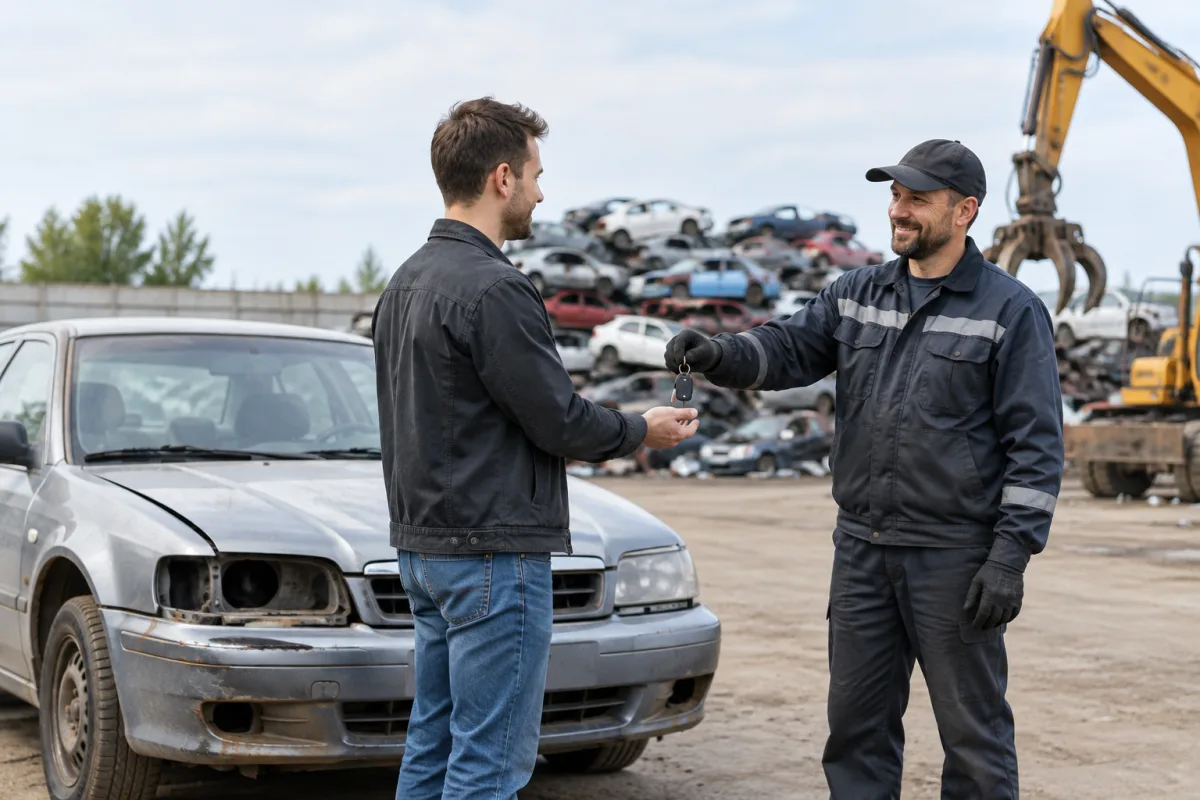
Selling an unwanted vehicle to a junk yard can be a practical way to clear space and recover money from a car that is damaged, incomplete, or too expensive to repair. The process usually involves gathering ownership documents, requesting several quotes, confirming towing arrangements, and completing the required transfer paperwork.
Requirements differ by state and by business, so confirm the details with the junk yard and the applicable state DMV before handing over the vehicle.
How to sell my car to a junk yard
- Gather the vehicle information. Have the make, model, year, mileage, condition, location, and an honest description of missing or damaged parts ready. Mention whether the catalytic converter, wheels, battery, engine, and other major components are present.
- Collect your paperwork. Most sellers should be prepared to provide proof of ownership, commonly the vehicle title. A junk yard may also request photo identification, registration, a bill of sale, or a lien release.
- Check for liens. If a lender is listed on the title, resolve the lien or obtain documentation showing that it has been released. A junk yard may not accept the vehicle without clear ownership.
- Contact several buyers. Request quotes from licensed junk yards, auto recyclers, salvage yards, and vehicle-buying services. Compare the total offer rather than accepting the first price.
- Confirm towing terms. Ask whether pickup is included, whether there is a separate towing charge, and whether the company can access the vehicle at its current location.
- Complete the sale and obtain a record. Sign only the documents you understand and request a receipt or other written confirmation showing that the vehicle was transferred.
What do you need to sell a car to a junk yard?
The exact list depends on your state and the buyer, but commonly requested items include:
- Vehicle title or other accepted proof of ownership
- Valid photo identification
- Registration, where required
- Bill of sale, if required by the state or junk yard
- Lien release, when a lender appears on the title
- Keys, if available
- Accurate vehicle details, including the VIN, mileage, condition, and location
Before arranging pickup, ask the junk yard exactly which documents it accepts. Some businesses may have additional requirements for vehicles with salvage or junk branding.
Where can I sell my car to a junk yard?
Potential buyers include local junk yards, auto recyclers, salvage yards, and vehicle-buying services. Search for businesses that are licensed or otherwise authorized in your area, then contact several companies for written or clearly stated offers.
When comparing junk yards who buy cars near you, check whether each quote includes towing and whether the business accepts vehicles without a title. Because no location was provided, the applicable state and local requirements must be confirmed before selecting a buyer.
What affects a junk yard’s offer?
The amount offered can depend on the vehicle’s make, model, year, condition, mileage, completeness, and location. The catalytic converter, reusable parts, and current demand for scrap metal or specific components may also affect the quote.
Give each buyer the same accurate information so the offers can be compared fairly. A vehicle that does not run may still have value because of its parts or recyclable materials.
What to do before the junk yard pickup
- Remove personal belongings from the cabin, trunk, glove box, and storage areas.
- Remove toll tags, parking permits, and other items connected to your accounts.
- Ask the buyer whether you should remove the license plates.
- Cancel or transfer insurance and registration as required.
- Photograph the vehicle and keep copies of the title, bill of sale, receipt, and pickup paperwork.
- Notify the state motor vehicle agency if required and complete any plate-surrender procedure.
Do not drain fuel, oil, coolant, refrigerant, or other fluids yourself unless you have the proper equipment and know the applicable safety requirements. End-of-life vehicles require proper management of fluids, batteries, tires, gas tanks, airbags, refrigerants, and certain mercury-containing components.
Handling the battery and special vehicle types
Do not place a lead-acid automotive battery in household trash or a municipal recycling bin. Return it to a battery retailer or use a local household hazardous-waste program.
Electric and hybrid vehicles may require specialized handling because their high-voltage lithium-ion battery packs can be hazardous. Do not remove or discard such a battery without guidance from the manufacturer, a qualified dealer, or an appropriately equipped recycler.
State paperwork after the sale
State rules are not uniform. Depending on where the vehicle is registered, you may need to notify the DMV, surrender the plates, submit a notice of sale, or keep specific transfer records. Check the applicable state DMV instructions and make sure the buyer’s paperwork accurately records the vehicle transfer.