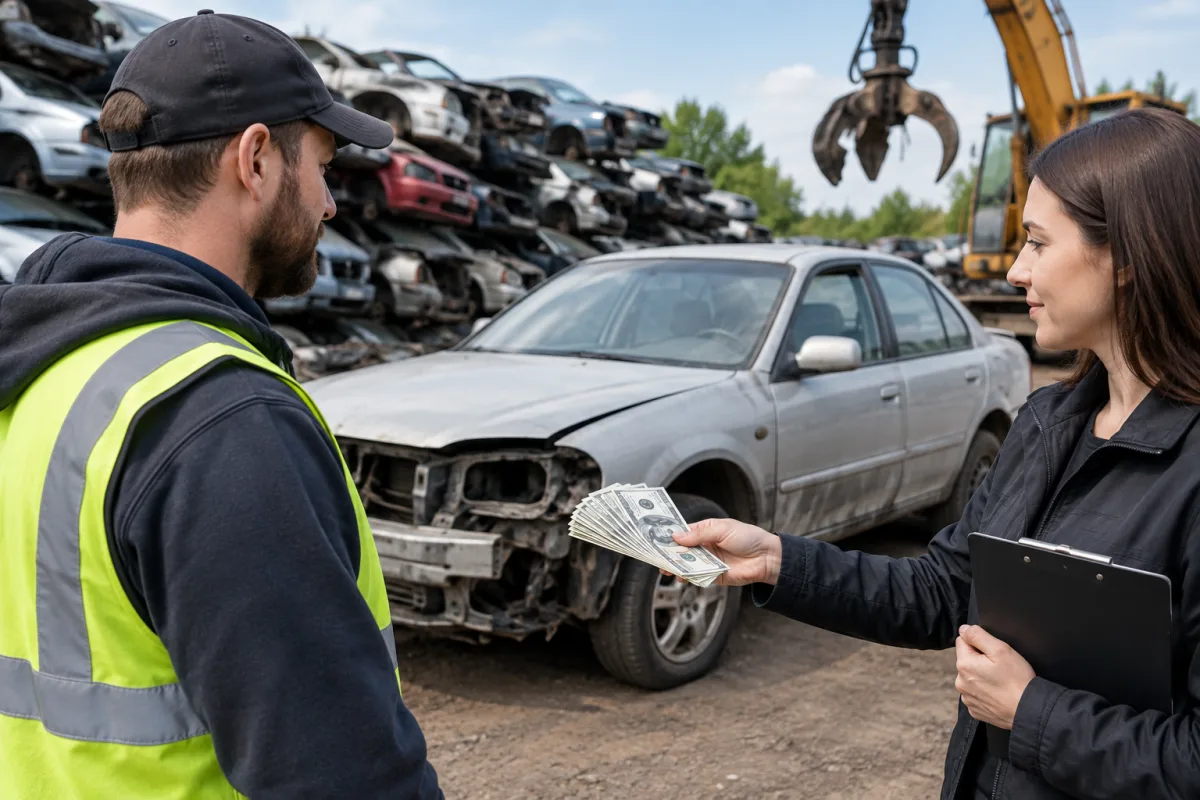
Junk yards do not pay one fixed nationwide price for every vehicle. The amount you can get depends on the car’s weight, condition, completeness, reusable parts, local scrap-metal prices, towing requirements, and whether the buyer plans to sell parts or process the vehicle only as scrap.
Recent junk-car offers can range from about $100 for a stripped older vehicle to more than $1,500 for a heavier, complete vehicle. These figures are broad examples, not guaranteed prices for every location or car.
How much do junk yards usually pay for cars?
A vehicle sold strictly for scrap is mainly valued by its metal weight. One published reference from JD Power cites approximately $125 per ton for a complete car as a scrap-value reference, while noting that scrap prices fluctuate with market conditions.
In practice, a junk yard may offer more than the basic metal value when the car contains parts that can be reused or resold. A complete vehicle with an intact engine, transmission, catalytic converter, battery, wheels, and other valuable components generally has more potential value than a stripped shell.
- Stripped older car: offers may be around $100, depending on weight and local prices.
- Complete standard vehicle: the offer may reflect both scrap metal and recoverable parts.
- Heavy, complete vehicle: some offers can exceed $1,500 when parts demand and local pricing are favorable.
What determines how much a junk yard will pay?
Vehicle weight
Heavier vehicles contain more metal, so they can produce a higher scrap payment than small cars, all else being equal. Scrap-metal prices in the local market also affect the amount the buyer can offer.
Completeness
A complete car is usually worth more than one missing major components. Removing the engine, transmission, catalytic converter, battery, wheels, or other parts can reduce the offer because the buyer loses both resale value and material.
Make, model, and year
Some vehicles have parts that are easier to resell or are in greater demand. A desirable model may therefore receive a higher offer than another car with a similar weight but fewer marketable components.
Condition and repairability
A damaged vehicle may be worth more as a salvage car than as basic scrap if it has repairable damage or valuable parts. A buyer evaluates whether the car should be dismantled for components or processed primarily for metal.
Location and towing
The distance to the vehicle, its accessibility, and the cost of transporting it can affect the final amount. Free towing may be included in some offers, but the buyer can adjust the payment for location, transport requirements, or problems that were not disclosed.
Title and vehicle documentation
Title and transfer requirements vary by state. A buyer may need specific documentation before completing the purchase, and the available payment or transfer process can depend on local rules.
How much is my car worth to a junk yard?
To estimate how much you can get for a car at a junk yard, gather the vehicle’s year, make, model, condition, mileage, location, title status, and information about missing or usable parts. Note whether the engine, transmission, catalytic converter, battery, wheels, and other major components are still present.
A complete vehicle with desirable parts may receive an offer above its bare scrap value. A stripped or heavily damaged vehicle is more likely to be priced mainly by weight. The same car can receive different offers from different buyers because junk yards have different processing costs, parts demand, towing distances, and regional metal prices.
Do junk yards pay you for your car?
Yes. Junk yards, salvage yards, and junk-car buyers commonly purchase vehicles and pay the seller after confirming the car’s condition, documentation, and ownership. The payment amount is determined by the buyer’s inspection or the information provided when requesting an offer.
Ask whether the quoted amount includes towing and whether any deductions apply. Confirm the required title or other documents before arranging the vehicle transfer, since requirements vary by state.
How to compare junk-car offers
- Describe the vehicle accurately, including missing parts and damage.
- Provide the year, make, model, location, and title status.
- Ask whether towing is included in the quoted amount.
- Confirm whether the price is final or subject to an inspection.
- Compare the payment, pickup terms, documentation requirements, and timing.
There is no universal answer to how much junk yards are paying for cars near you. A realistic offer depends on the vehicle’s scrap weight, reusable parts, condition, local market, and pickup cost. For many cars, the difference between a low and high offer comes from whether the buyer sees the vehicle as a source of parts or only as scrap metal.